
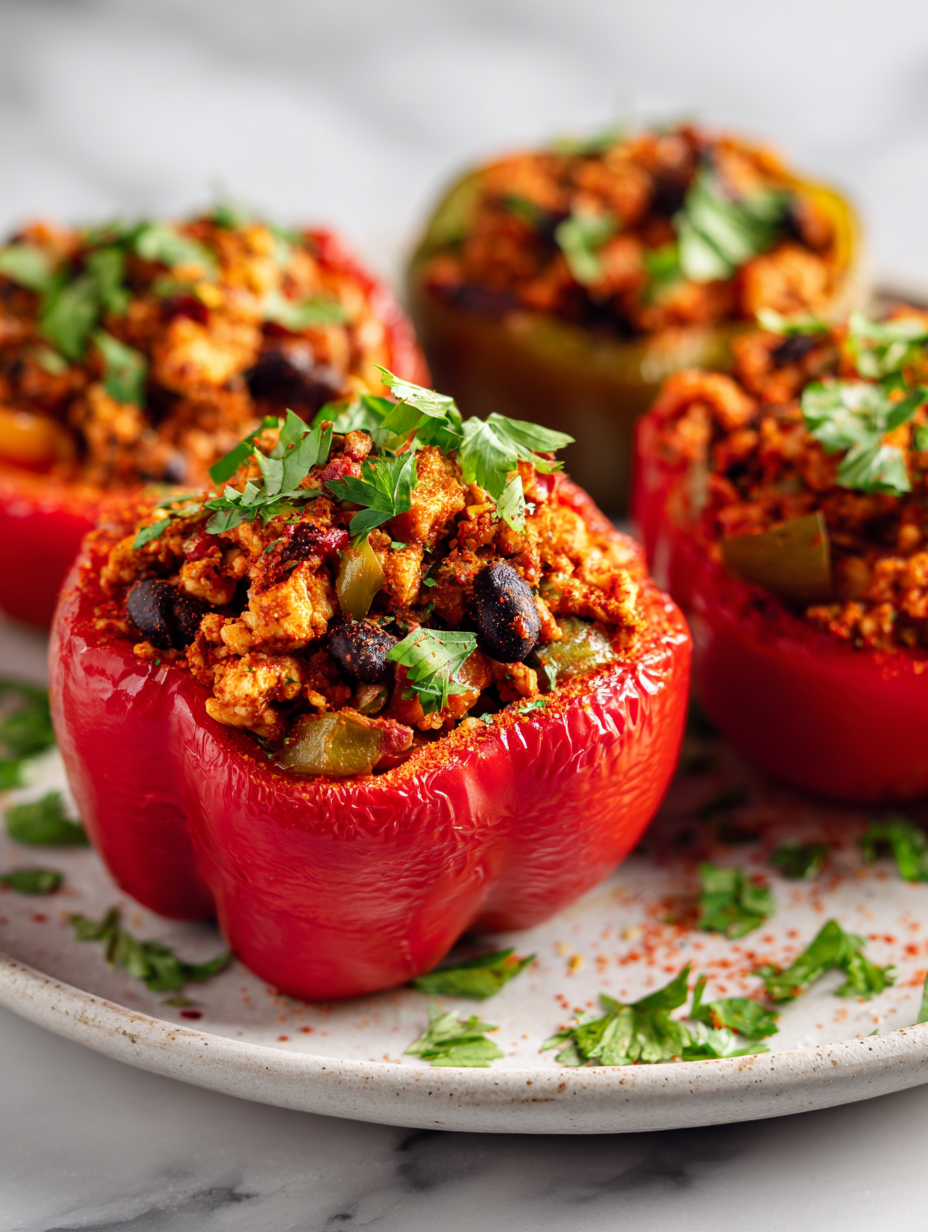
Vegan stuffed peppers often get a reputation for being a bit bland or too straightforward, but I like to think of them as a canvas for smoky, spicy, and tangy flavors that dance together with every bite. It’s not just about stuffing peppers; it’s about balancing those bold notes so each forkful bursts with excitement, even without dairy or meat. Honestly, once you nail that harmony, these peppers become a go-to for casual dinners or when you want something comforting but vibrant.
What drew me to this dish was the challenge of elevating simple ingredients—bell peppers, grains, beans—into something memorable. I love how the smoky paprika, a touch of chili, and a splash of tangy vinegar can turn humble into extraordinary. It’s a reminder that you don’t need fancy ingredients to create something that feels special, just a good sense of flavor balance and a little bit of patience in your prep. Plus, it’s a dish that invites endless tweaks, making it uniquely yours every time.
Focusing on the overlooked art of balancing smoky, spicy, and tangy flavors in vegan stuffed peppers to create a dish that’s both comforting and vibrant, elevating everyday ingredients into a memorable meal.
Smoky, Spicy, Vibrant
- I love how these peppers remind me of summer cookouts, even in the middle of winter, thanks to that smoky aroma.
- There’s a quiet pride I feel when I see someone unfamiliar take that first bite and smile at the explosion of flavors.
- Sometimes, I get a little chaotic chopping all the herbs and spices, but it’s worth every messy moment.
- This dish feels like a small victory—simple ingredients, turned into something vibrant and full of life.
- Honestly, I find comfort in how adaptable it is—every time I make it, I tweak the fillings just a bit, and it never disappoints.
The story behind this recipe
This recipe was born out of a craving for something hearty yet bright, a way to bring more flavor into simple ingredients. I remember the first time I tossed smoky paprika and a splash of lemon into a batch of peppers—everything changed. It’s a dish that’s as much about the process as the result, each step revealing a little more of what makes good food memorable. Honestly, it’s become my go-to when I want something satisfying but not heavy, with just enough zing to keep things interesting.
Trivia and Historical Notes
- Vegan stuffed peppers gained popularity in the 1970s as part of the rise of plant-based eating and health-conscious cooking.
- The dish has roots in Mediterranean and Middle Eastern cuisines, where stuffed vegetables like dolmas are common but typically include meat or dairy.
- Bell peppers became a popular vessel for stuffing in Western cuisine due to their sturdy flesh and natural sweetness, which balances spicy and savory fillings.
- In some cultures, stuffed peppers are a symbol of abundance and celebration, often prepared during harvest festivals with vibrant ingredients.
- Recent vegan adaptations emphasize smoky, spicy, and tangy flavors, transforming this humble dish into a vibrant, flavor-packed meal.
Ingredient breakdown: flavor essentials
- Bell peppers: I love using large, firm peppers that feel heavy and have a vibrant shine—your best bet for stuffing without leaks. Swap for poblano if you want a smoky kick, but expect a slightly different heat profile.
- Quinoa: I prefer fluffy, well-cooked quinoa with a nutty aroma—makes the stuffing light yet satisfying. You can use cauliflower rice for a lower-carb version, but it’ll change the texture quite a bit.
- Black beans: Creamy, hearty, and a bit earthy—these add protein and bulk. Swap with lentils if you like a softer bite, but keep an eye on cooking times to avoid mushiness.
- Smoked paprika: This is the secret weapon for that smoky depth—smells like a campfire in a jar. If unavailable, chipotle powder works, but it’s spicier and more intense.
- Vinegar: I usually reach for apple cider vinegar for brightness—adds a tang that balances the richness. Lemon juice is an easy substitute, giving a fresh, zesty punch.
- Herbs & spices: Fresh cilantro and a pinch of chili flakes bring vibrancy and warmth—don’t skimp on the fresh herbs; they lift the whole dish. Dried herbs can work, but won’t deliver quite the same punch.
- Olive oil: I use a splash to sauté the filling ingredients—brings everything together with a mild fruity aroma. A neutral oil like avocado works too, but skip the butter if you want vegan authenticity.
Spotlight on key ingredients
Bell peppers:
- I love using large, firm peppers that feel heavy and have a vibrant shine—your best bet for stuffing without leaks. Swap for poblano if you want a smoky kick, but expect a slightly different heat profile.
- Quinoa: I prefer fluffy, well-cooked quinoa with a nutty aroma—makes the stuffing light yet satisfying. You can use cauliflower rice for a lower-carb version, but it’ll change the texture quite a bit.
- Black beans: Creamy, hearty, and a bit earthy—these add protein and bulk. Swap with lentils if you like a softer bite, but keep an eye on cooking times to avoid mushiness.
Smoked paprika & Vinegar:
- Smoked paprika: This is the secret weapon for that smoky depth—smells like a campfire in a jar. If unavailable, chipotle powder works, but it’s spicier and more intense.
- Vinegar: I usually reach for apple cider vinegar for brightness—adds a tang that balances the richness. Lemon juice is an easy substitute, giving a fresh, zesty punch.
Notes for ingredient swaps
- Dairy-Free: Use coconut yogurt or cashew cheese instead of dairy-based cheese—keeps it creamy but adds a subtle nutty note.
- Grain Swap: Quinoa is my go-to, but cauliflower rice or bulgur work well if you want a different texture or lower carbs.
- Bean Options: Black beans bring creaminess, but chickpeas or lentils can be used for a softer bite or different flavor profile.
- Smoked Flavor: Smoked paprika is key, but chipotle powder can add more heat and smokiness if you like it spicier.
- Vinegar Alternative: Apple cider vinegar brightens the filling, but lemon juice offers a fresh, zesty punch that works just as well.
- Pepper Variety: Bell peppers are classic, but poblano peppers give a deeper smoky flavor—just watch the heat level.
- Oil Choices: Olive oil is my favorite for sautéing, but avocado oil or even a splash of sesame oil can add different aroma notes.
Equipment & Tools
- Oven: To bake and roast the peppers
- Large skillet: To cook the filling ingredients
- Knife: To cut tops and dice ingredients
- Spoon: To stuff the peppers
- Baking dish: To hold peppers during baking
- Aluminum foil: To cover peppers while baking
Step-by-step guide to stuffed peppers
- Preheat your oven to 200°C (390°F). Slice the tops off 4 large bell peppers, remove seeds and membranes, and set aside. Lightly brush the peppers’ outsides with olive oil for roasting.
- In a large skillet over medium heat (about 160°C/320°F), warm 2 tablespoons of olive oil. Add 1 diced onion and cook until translucent, about 5 minutes. Stir in 2 minced garlic cloves and cook for another minute until fragrant.
- Add 1 cup cooked quinoa, 1 cup cooked black beans (rinsed), 1 teaspoon smoked paprika, 1/2 teaspoon chili flakes, and a pinch of salt and pepper. Cook, stirring often, for 3-4 minutes until combined and heated through. You should smell smoky and spicy with a hint of garlic.
- Stir in 1 tablespoon apple cider vinegar and a handful of chopped fresh cilantro. Taste and adjust seasoning—more salt, spice, or acidity if needed. Remove from heat and let cool slightly, about 5 minutes.
- Stuff each pepper generously with the filling, pressing down gently to pack. Place the stuffed peppers in a baking dish and cover with foil. Bake for 25-30 minutes, until peppers are tender and slightly blistered on top.
- Remove from oven, uncover, and let rest for 5 minutes. Drizzle with a little more olive oil or a squeeze of lemon for brightness. Serve warm, garnished with extra herbs if desired.
- For a crispy top, broil on high for 2-3 minutes, watching carefully to prevent burning. Check for doneness—peppers should be soft, filling hot and bubbling, and the tops slightly charred for some smoky crunch.
Let the stuffed peppers rest for 5 minutes after baking. Plate them whole or halved, garnished with fresh herbs or a squeeze of lemon for added brightness.
How to Know It’s Done
- Peppers are tender when pierced easily with a fork.
- Filling is heated through and slightly crispy on top if broiled.
- Peppers have a lightly blistered, slightly blackened skin for added flavor.
Vegan Stuffed Peppers with Smoky, Spicy Flavors
Ingredients
Equipment
Method
- Preheat your oven to 200°C (390°F). Slice the tops off the bell peppers, carefully remove seeds and membranes, then brush the outside lightly with olive oil. Place them upright in a baking dish and set aside.
- In a large skillet, warm the olive oil over medium heat until it shimmers. Add the diced onion and cook, stirring occasionally, until translucent and fragrant, about 5 minutes. Add the minced garlic and cook for another minute until it releases a savory aroma.
- Stir in the cooked quinoa, rinsed black beans, smoked paprika, chili flakes, and a pinch of salt and pepper. Cook the mixture for 3-4 minutes, stirring often, until everything is heated through and fragrant. You should see the spices coating the grains and beans evenly.
- Add the apple cider vinegar and chopped cilantro to the skillet, stirring to combine. Taste the filling and adjust the seasoning if needed. Remove from heat and let it cool slightly, about 2-3 minutes.
- Using a spoon, carefully stuff each pepper with the filling, pressing gently to pack it in without spilling. Fill them to the top and ensure they’re well-seated in the dish.
- Cover the baking dish with aluminum foil and bake for 25-30 minutes, until the peppers are tender and slightly blistered on top. The filling should be hot and bubbling when ready.
- Uncover the peppers and, for extra smoky flavor and a bit of crunch, broil on high for 2-3 minutes until the tops are lightly charred. Keep a close eye to prevent burning.
- Remove the peppers from the oven and let them rest for 5 minutes. Drizzle with a little more olive oil or a squeeze of lemon if desired, then serve warm, garnished with extra cilantro or herbs.
Pro tips for perfect stuffed peppers
- Use a hot pan to sear the filling; it should crackle and develop a slight golden crust.
- When sautéing aromatics, cook until fragrant—about 1-2 minutes—before adding grains to deepen flavor.
- For even stuffing, pack the filling gently but firmly to avoid spillage as peppers bake.
- Broil the peppers for 2-3 minutes at the end to achieve a smoky, slightly charred top surface.
- Taste the filling before stuffing, adjusting seasoning—more salt, spice, or acidity—to suit your palate.
- When roasting peppers, brush with oil and turn halfway through—skin should blister lightly, not burn.
- Rest baked peppers for 5 minutes after removing from oven to allow flavors to meld and filling to set.
Common mistakes and how to fix them
- MISPLACED INGREDIENTS: Remember to sauté aromatics before adding grains for better flavor.
- OVERCOOKED PEPPERS: Roast until just tender to keep peppers firm but not mushy.
- SKIPPED RESTING: Let stuffed peppers sit 5 minutes post-baking to set the filling.
- UNDERESTIMATED SPICE: Taste and adjust seasonings before baking for a flavor boost.
Quick fixes and pantry swaps
- When sauce shimmers, it’s ready—don’t overcook or it’ll burn quickly.
- Splash a bit of water if filling is too dry or crumbly before stuffing peppers.
- Patch burnt pepper tops with foil and finish baking to save flavor and appearance.
- DUMPED too much vinegar? Balance with a pinch of sweetness like maple syrup or agave.
- When in doubt, swap canned beans for cooked lentils—same texture, different flavor profile.
Prep, store, and reheat tips
- You can prepare the filling a day in advance; store in an airtight container in the fridge for up to 24 hours. The flavors will meld beautifully, and the mixture will be easier to stuff when chilled.
- Roast or prepare the peppers a few hours ahead. Keep them covered in the fridge; reheat briefly in a warm oven or microwave until just heated through, noticing the peppers become tender and slightly charred again.
- Stuffed peppers taste even better the next day. Store leftovers in the fridge for up to 3 days; reheat in the oven at 180°C (350°F) until bubbling and fragrant, about 10-15 minutes.
- For freezer storage, assemble the stuffed peppers unbaked, wrap tightly, and freeze for up to 1 month. Thaw overnight in the fridge, then reheat in the oven for best texture—peppers should be soft and filling hot and bubbling.
Top questions about vegan stuffed peppers
1. How do I pick the best peppers?
Look for peppers that are firm, heavy, and have vibrant color. Soft or wrinkled peppers may be past their prime.
2. How do I prevent stuffed peppers from leaking?
To prevent peppers from leaking, remove seeds carefully and roast them until just tender, not mushy.
3. What grains work best in the filling?
Use cooked quinoa or rice as a base in the filling; it adds fluff and helps bind flavors together.
4. Can I use a different spice instead of smoked paprika?
Smoked paprika adds that signature smoky flavor, but if you don’t have it, chipotle powder is a good substitute.
5. Can I substitute vinegar or lemon juice?
Yes, lemon juice or apple cider vinegar brightens the filling and balances the smoky flavors without overpowering.
6. How can I make the filling creamier?
For a softer, creamier filling, mash some cooked beans or add a touch of vegan cheese or yogurt.
7. How do I get a crispy top on the peppers?
Bake the peppers uncovered for the last few minutes to achieve a slightly blistered, smoky top.
8. Can I prepare the filling in advance?
Prepping the filling ahead of time can save time; just assemble and bake when ready.
9. How long do leftovers last?
Leftover stuffed peppers can be stored in the fridge for up to 3 days, covered tightly.
10. How should I reheat leftovers?
Reheat in the oven at 180°C (350°F) until hot and bubbling, about 10-15 minutes, for best texture.
These vegan stuffed peppers are more than just a meal—they’re a reminder that simple ingredients can be turned into something vibrant and satisfying. The smoky, spicy notes bring a depth that keeps you coming back for more, even on busy nights. It’s a dish that feels both familiar and fresh, perfect for any season or occasion.
Whenever I make these, I think about how food can be a small act of creativity and comfort. Sharing them with someone or enjoying them on a quiet evening makes the effort worth it. They might not be fancy, but they’re honest, hearty, and rooted in true flavor.

Hi, I’m Daniel Whitaker, the voice behind Micromanaging Flavor. For me, micromanaging flavor is not about perfectionism. It is about paying attention. It is about understanding the small adjustments that turn a good dish into a great one. This blog is my space to explore those details and share what I learn along the way.
