
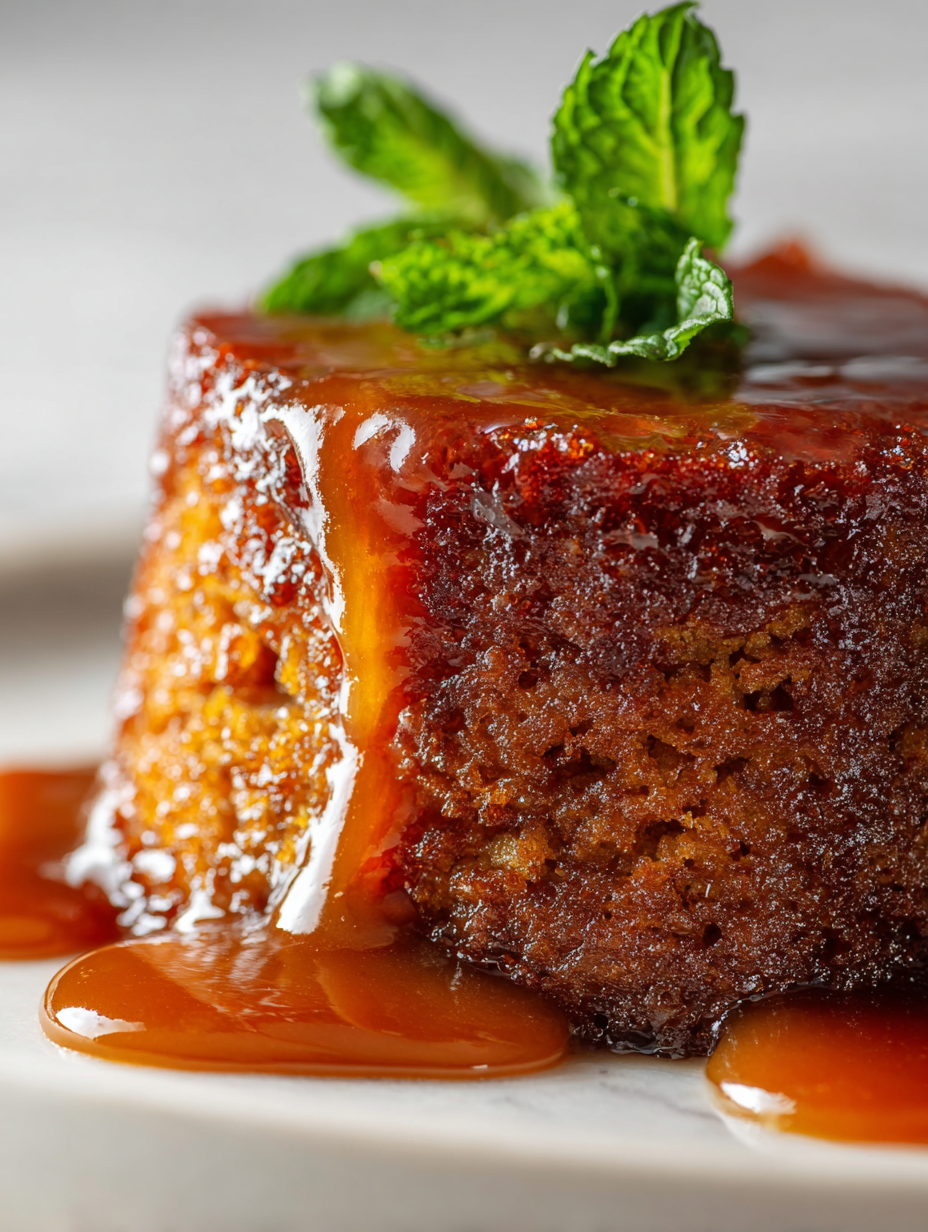
I’ve always loved how the edges of a sticky toffee pudding get this beautiful, slightly charred caramelization that adds a smoky depth. It’s like the sugar almost catches fire and then melts back into this rich, complex flavor that balances the sweetness inside. That contrast between the crispy, almost burnt sugar crust and the gooey center keeps me coming back for more.
This recipe isn’t just about the flavor — it’s about the process. I’ve learned that the key is in that caramelized edge, which develops when you cook the sugar just enough to turn amber and crackle. It’s a small detail that makes a big difference in how the pudding hits your palate — a little bit smoky, a little bit sweet, and totally addictive.
Focusing on how the caramelized edges of the pudding develop a slightly smoky, almost burnt sugar note that balances the rich sweetness inside, highlighting the contrast between textures and flavors.
Caramelized Edges and Smoky Depth
- Baking this pudding always takes me back to cozy Sunday afternoons at my grandma’s house, where the smell of caramel and baked sugar filled the air.
- There’s a quiet pride in getting that perfect sticky, gooey center—like a warm hug in every bite, especially after a long day.
- I love how the crispy edges crackle when you cut into it, revealing that luscious, almost molten toffee beneath.
- Making this recipe feels like a small act of rebellion — indulging in something so rich, yet so straightforward and honest.
- Sharing this warm pudding with friends always sparks stories and laughter, the way good desserts tend to do.
Caramelized Edges and Smoky Depth
Growing up in a small town, I remember the first time I tasted sticky toffee pudding at a local bakery. The rich aroma of caramelized sugar and warm, moist sponge was like a hug in dessert form. Over the years, I’ve tinkered with the recipe, trying to perfect that elusive balance of smoky sweetness and gooey decadence. It’s become my go-to comfort treat, especially on chilly evenings when a little nostalgia warms the soul.
Trivia and Historical Notes
- Sticky toffee pudding originated in Britain, likely in the 20th century, as a rich, comforting dessert for cold evenings.
- The dish was initially popularized in the North of England, where warm, hearty desserts matched the climate and local tastes.
- Traditionally, it uses dates because they were an affordable way to add natural sweetness and moisture to baked goods.
- The pudding’s sauce, made from butter, sugar, and cream, was historically a way to stretch ingredients during post-war rationing.
- In the UK, it’s often served with custard, vanilla ice cream, or a drizzle of extra toffee—each adds a different mood to the experience.
Key Ingredients Breakdown
- Dates: I love how these sticky, deep-brown gems add natural sweetness and moisture, making every bite oozy. You can swap with prunes for a slightly less intense flavor, but don’t skip the soft, chewy texture.
- Dark Brown Sugar: It’s the backbone of that rich, caramel flavor. If you only have light brown sugar, add a teaspoon of molasses for depth and that smoky edge.
- Butter: Creamy, slightly salty—makes the pudding tender and luscious. Margarine works in a pinch, but it won’t deliver quite the same richness or that faint buttery aroma.
- Self-Raising Flour: It gives the pudding its airy rise. For a gluten-free version, swap with almond or oat flour, but expect a denser crumb with a different chew.
- Black Treacle (or Molasses): Adds a smoky, slightly bitter note that balances the sweetness. If you don’t have it, dark corn syrup can mimic that deep, syrupy quality, just a tad sweeter.
- Fresh Cream or Double Cream: For that glossy, luscious sauce. Coconut cream can stand in if you’re dairy-free, though it’ll add a subtle coconut undertone and a thicker consistency.
- Vanilla Extract: I love the warm, floral aroma it adds—don’t skip it. Almond extract is a good alternative if you want a nuttier twist, but keep it subtle.
Spotlight on key ingredients
Dates:
- I love how these sticky, deep-brown gems add natural sweetness and moisture, making every bite oozy. You can swap with prunes for a slightly less intense flavor, but don’t skip the soft, chewy texture.
- Dark Brown Sugar: It’s the backbone of that rich, caramel flavor. If you only have light brown sugar, add a teaspoon of molasses for depth and that smoky edge.
- Black Treacle (or Molasses): Adds a smoky, slightly bitter note that balances the sweetness. If you don’t have it, dark corn syrup can mimic that deep, syrupy quality, just a tad sweeter.
Cream and Vanilla:
- Butter: Creamy, slightly salty—makes the pudding tender and luscious. Margarine works in a pinch, but it won’t deliver quite the same richness or that faint buttery aroma.
- Heavy Cream: Brings that glossy, luscious finish to the sauce. Coconut cream can stand in if you’re dairy-free, adding a subtle coconut undertone and thicker texture.
- Vanilla Extract: I love the warm, floral aroma it adds—don’t skip it. Almond extract is a good alternative if you want a nuttier twist, but keep it subtle.
Notes for ingredient swaps
- Dates: I love how these sticky, deep-brown gems add natural sweetness and moisture, making every bite oozy. You can swap with prunes for a slightly less intense flavor, but don’t skip the soft, chewy texture.
- Dark Brown Sugar: It’s the backbone of that rich, caramel flavor. If you only have light brown sugar, add a teaspoon of molasses for depth and that smoky edge.
- Butter: Creamy, slightly salty—makes the pudding tender and luscious. Margarine works in a pinch, but it won’t deliver quite the same richness or that faint buttery aroma.
- Self-Raising Flour: It gives the pudding its airy rise. For a gluten-free version, swap with almond or oat flour, but expect a denser crumb with a different chew.
- Black Treacle (or Molasses): Adds a smoky, slightly bitter note that balances the sweetness. If you don’t have it, dark corn syrup can mimic that deep, syrupy quality, just a tad sweeter.
- Fresh Cream or Double Cream: For that glossy, luscious sauce. Coconut cream can stand in if you’re dairy-free, though it’ll add a subtle coconut undertone and a thicker consistency.
- Vanilla Extract: I love the warm, floral aroma it adds—don’t skip it. Almond extract is a good alternative if you want a nuttier twist, but keep it subtle.
Equipment & Tools
- 8-inch baking dish: Holds the pudding for baking and serving.
- Saucepan: Simmer the dates and prepare the toffee sauce.
- Mixing bowls: Combine wet and dry ingredients.
- Spatula: Fold ingredients and smooth batter.
- Toothpick or skewer: Check for doneness.
Step-by-step guide to sticky toffee pudding
- Preheat your oven to 180°C (350°F). Grease an 8-inch baking dish or individual ramekins with butter. Line the bottom with parchment if you like for easy removal.
- Chop the dates into small pieces. In a small saucepan, bring 1 cup of water to a boil. Add the dates and 1 teaspoon baking soda. Simmer for 5 minutes until soft and sticky. Let cool slightly.
- In a mixing bowl, cream 1/2 cup (115g) butter and 1/2 cup (100g) dark brown sugar until light and fluffy, about 2-3 minutes. Scrape down the sides as needed.
- Add 2 large eggs one at a time, beating well after each addition. Mix in 1 teaspoon vanilla extract. The mixture should be smooth and slightly fluffy.
- Mash the cooled dates and fold them into the wet mixture. Sift together 1 cup (125g) self-raising flour and 1/4 teaspoon salt. Gently fold the dry ingredients into the batter until just combined.
- Pour the batter into the prepared dish or ramekins. Smooth the surface with a spatula. Bake for 25-30 minutes until the top is golden and a toothpick inserted comes out with moist crumbs.
- While baking, prepare the toffee sauce: In a saucepan, melt 1/2 cup (125g) butter with 1/2 cup (100g) dark brown sugar and 1/2 cup (120ml) heavy cream. Bring to a simmer, stirring constantly, for 2-3 minutes. Remove from heat.
- Once out of the oven, let the pudding rest for 5 minutes. Poke some holes on top with a skewer and pour the warm toffee sauce over. Let soak for a few minutes to absorb.
- Serve the pudding warm, with extra sauce spooned over, and a dollop of cream or ice cream if desired. The edges should be crispy and caramelized, with a gooey center.
Let the pudding sit for a few minutes after baking to settle. Serve warm, drizzled with warm toffee sauce, and optionally add cream or ice cream for contrast.
How to Know It’s Done
- Golden edges and a slightly cracked top indicate doneness.
- A toothpick inserted into the center comes out with moist crumbs but no wet batter.
- The sauce is bubbling gently when poured over the hot pudding, with a rich caramel aroma.
Sticky Toffee Pudding with Caramelized Edges
Ingredients
Equipment
Method
- Bring water to a boil in a saucepan, then add chopped dates and baking soda. Reduce heat and simmer for 5 minutes until dates are soft and sticky. Let cool slightly.
- In a mixing bowl, cream together softened butter and dark brown sugar until the mixture is light, fluffy, and smells caramelized, about 2-3 minutes.
- Add eggs one at a time, beating well after each addition to incorporate air and create a smooth batter. Mix in vanilla extract for warmth and aroma.
- Fold the cooled, mashed dates into the wet mixture, combining thoroughly until the batter is rich and sticky.
- Sift together self-raising flour and salt, then gently fold into the wet ingredients until just combined. The batter should be thick and glossy.
- Pour the batter into an prepared 8-inch baking dish or ramekins, smoothing the surface with a spatula. Bake in a preheated oven at 180°C (350°F) for 25-30 minutes, until edges are golden and a toothpick inserted into the center comes out moist but not wet.
- While the pudding bakes, make the toffee sauce by combining heavy cream, black treacle, and a little butter in a saucepan. Bring to a gentle simmer and cook for 2-3 minutes until the sauce is glossy and thickened.
- Remove the pudding from the oven and let it rest for 5 minutes. Poke holes all over the top with a skewer and pour warm toffee sauce generously over, allowing it to soak in and caramelize at the edges.
- Serve the pudding while warm, with extra sauce drizzled over the crispy edges and a scoop of cream or ice cream if desired. The contrast between crispy caramelized crust and gooey inside makes each bite irresistible.
Pro tips for perfect sticky toffee pudding
- Bolded caramelization: Watch for a deep amber color and crackling sound to know when the sugar hits that perfect smoky note.
- Bolded date prep: Chop dates into small pieces so they distribute evenly and create that luscious, gooey texture inside the pudding.
- Bolded sugar addition: Add brown sugar gradually to avoid lumps and ensure a smooth, caramel-rich batter.
- Bolded baking time: Start checking around 25 minutes; edges should be golden and slightly crisp, with a moist center.
- Bolded sauce pour: Warm the toffee sauce until it’s bubbling gently before pouring over hot pudding for that shiny, sticky finish.
- Bolded resting: Let the pudding sit for 5 minutes after baking—this allows flavors to settle and makes slicing easier.
- Bolded sauce consistency: For a glossy, clingy sauce, simmer gently until it thickens slightly—avoid overcooking to prevent crystallization.
Common mistakes and how to fix them
- FORGOT to preheat the oven → Preheat thoroughly before baking.
- DUMPED the sugar mixture too quickly → Add sugar gradually, stirring constantly.
- OVER-TORCHED the pudding → Remove early if edges darken too much.
- MISSED checking for moist crumbs → Use a toothpick test for doneness.
Quick fixes and pantry swaps
- When sugar caramelizes too quickly, splash in a little more water to slow the process.
- If pudding is too dense, swap out part of the flour for oats for a lighter texture.
- Dumped sauce too thick? Patch with a splash of hot cream, whisk until smooth.
- Over-torched edges? Shield with foil and continue baking—prevent bitter tastes and preserve moisture.
- Splash a pinch of lemon juice if sauce lacks brightness—shimmering and zingy finish.
Prep, store, and reheat tips
- Prepare the sauce and soak the dates a day ahead; both develop deeper flavor overnight, with a richer aroma and more intense caramel notes.
- The pudding itself can be baked up to 24 hours in advance; reheat gently to preserve moistness and ensure edges stay crispy.
- Store leftovers in an airtight container in the fridge for up to 3 days; the pudding firms slightly but still retains that luscious, sticky texture.
- Reheat in a low oven (around 150°C/300°F) for 15-20 minutes, or microwave in short bursts, until warm and inviting, with the sauce bubbling gently.
Top questions about sticky toffee pudding
1. What exactly is sticky toffee pudding?
A moist, dense sponge with a deeply caramelized, slightly smoky crust that balances sweetness and richness.
2. Can I use different dried fruits instead of dates?
Use dates soaked in baking soda and water for that natural sweetness and gooey texture. Dried figs or prunes can work as substitutes.
3. How do I know when the pudding is done?
Bake until edges are golden and cracked, and a toothpick poked in comes out moist but not wet. The top should be slightly firm but tender.
4. How do I reheat leftover pudding without drying it out?
Reheat gently in the oven or microwave until warm and bubbling. Pour warm toffee sauce over just before serving for best texture.
5. Can I make this dairy-free?
You can swap butter with margarine or coconut oil, though it may slightly alter the richness or flavor profile.
6. What sugar can I use if I don’t have dark brown sugar?
Use light brown sugar instead of dark, but add a teaspoon of molasses to deepen the caramel flavor if desired.
7. How can I enhance the flavor of the sauce?
Add a splash of lemon juice or a pinch of salt to enhance flavor and balance sweetness. A pinch of sea salt can also intensify caramel notes.
8. Why is my pudding dense and heavy?
Avoid overmixing the batter to keep the pudding light. Mix until just combined to prevent a dense texture.
9. How should I serve leftover pudding?
Use a sharp knife to cut clean slices, and serve immediately with extra sauce or cream for best texture.
10. Can I freeze sticky toffee pudding?
Yes, freezing works well. Wrap in plastic, store in an airtight container, and reheat gently for best results.
Baking this pudding always feels like a small act of rebellion—indulging in something so rich, yet so straightforward and honest. Sharing it with friends sparks stories and laughter, the way good desserts tend to do.
In the end, it’s those crispy caramelized edges and that gooey center that stay with me. This dessert reminds me that sometimes, simple ingredients and a little patience are all you need for something truly memorable.

Hi, I’m Daniel Whitaker, the voice behind Micromanaging Flavor. For me, micromanaging flavor is not about perfectionism. It is about paying attention. It is about understanding the small adjustments that turn a good dish into a great one. This blog is my space to explore those details and share what I learn along the way.
