
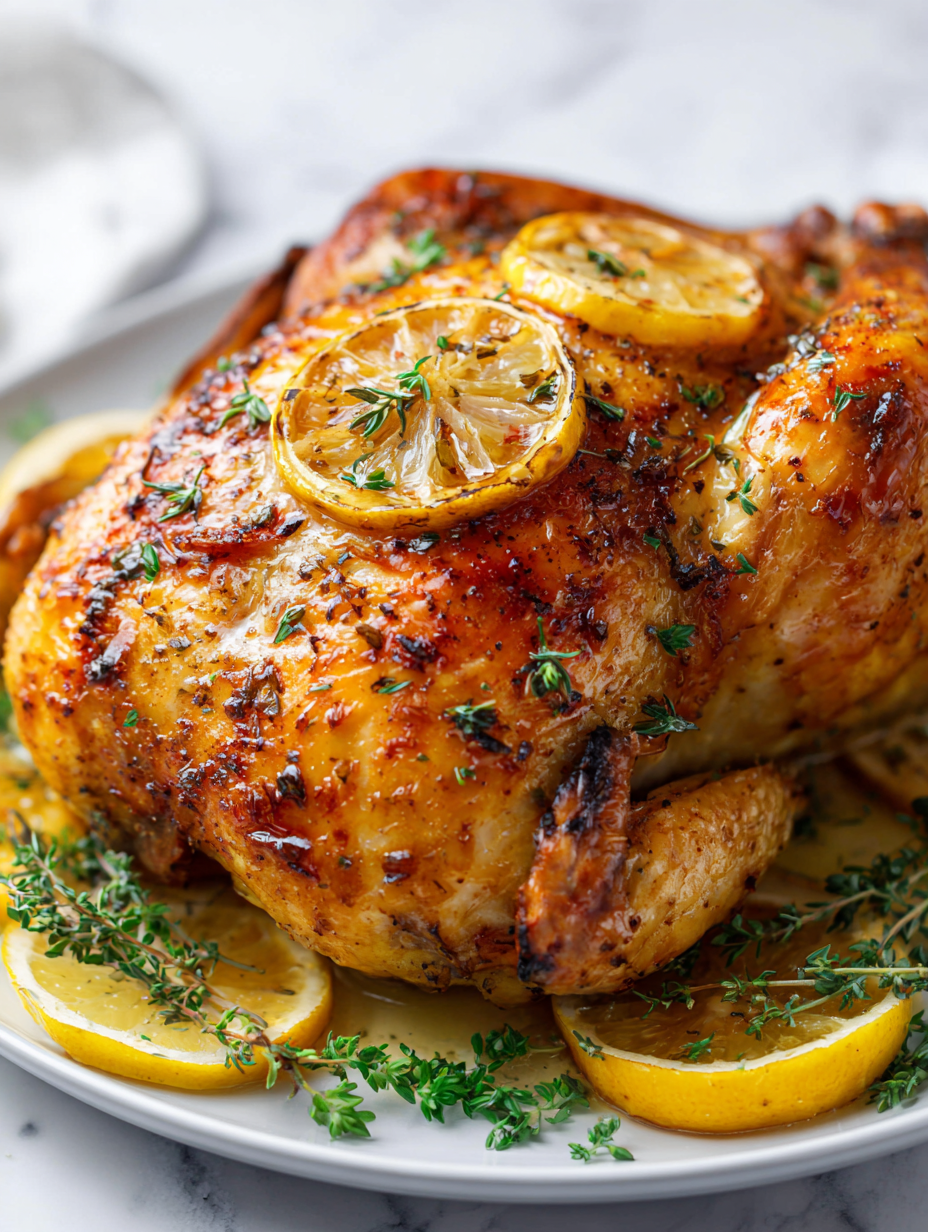
Sometimes, it’s the simplest things that make the biggest impact. A whole roast chicken, brightened with lemon and fresh herbs, feels like a little celebration on a plate. It’s honest, unpretentious, but somehow elevates a weekday dinner into something special.
I’ve always believed that good ingredients need nothing fancy to shine. The lemon’s tang and the herbs’ fragrant punch wake up the meat, making every bite feel fresh and lively. It’s a dish that reminds me: simplicity isn’t boring, it’s honest and real.
Making this roast feels like a small ritual—an act of tuning into what’s fresh and seasonal, then letting those flavors do the work. There’s a comfort in knowing that a humble chicken, with just a few bright touches, can turn into a memorable meal that’s full of sunshine and soul.
Focusing on the transformative power of simple ingredients—how lemon and herbs can turn a humble roast chicken into a celebration of bright, fresh flavors that awaken the senses and bring a sense of clarity to busy weeknights.
A Simple Roast with Bright Flavors
- Cooking this roast always reminds me of lazy Sunday afternoons in my childhood kitchen, the smell of herbs filling the air.
- I love how a simple squeeze of lemon just before serving cuts through the richness, making the chicken feel unexpectedly light.
- There’s a messy joy in pulling crispy-skinned chicken from the oven, knowing it’s going to be a flavorful, healing meal.
A Personal Touch with Bright Flavors
- This recipe was born out of a need for a no-fuss Sunday dinner that still felt special. I remember a summer afternoon, the kitchen filled with the scent of herbs and lemon zest, and thinking how simple ingredients could turn into something memorable. It’s a dish that keeps me grounded, reminding me that good food doesn’t need to be complicated.
- Every time I roast a chicken with lemon and herbs, I think of my grandmother’s old cookbook, where she used whatever fresh herbs she had on hand—sometimes thyme, sometimes rosemary. Her instinct for flavor balance, using bright citrus to cut through rich meat, is what I try to emulate. It’s honest, it’s easy, and it’s rooted in tradition.
- heading: ‘A Personal Touch with Bright Flavors’
Historical & Cultural Notes
- Historically, roasting poultry with herbs and citrus dates back to medieval Europe, where aromatic herbs and preserved lemons were used to brighten meat flavors.
- Lemon’s role in roast chicken gained popularity in Mediterranean cuisines, especially in coastal regions where fresh citrus was abundant and valued for its preservative qualities.
- Ancient Romans often used lemon and herbs in their poultry dishes, believing the combination aided digestion and enhanced flavor.
- The pairing of lemon and herbs is a culinary tradition that crosses many cultures, from French Provençal to North African tagines, highlighting its universal appeal.
Key Ingredients and Tips
- Chicken: I choose a free-range whole bird for flavor and juiciness—you want that rich, meaty aroma filling your kitchen. Swap with a spatchcocked bird if you prefer quicker, more even cooking.
- Lemon: Bright, zesty, and slightly tangy. I love squeezing fresh lemon just before serving to wake up the herbs and meat. If you don’t have fresh, use high-quality bottled lemon juice, but it won’t have that oozy brightness.
- Herbs: I use a mix of thyme and rosemary, their earthy, fragrant oils filling the air as they roast. Feel free to switch in sage or oregano—just go for what’s fresh and pungent. Dried herbs are okay but use half as much.
- Garlic: I crush whole cloves, their pungent aroma roasting out into sweet, mellow notes. For a milder flavor, use sliced garlic, but don’t skip it—it’s the backbone of that fragrant punch.
- Olive Oil: I drizzle generously, aiming for a glossy, crackling skin. Use good-quality extra virgin—skip the cheap stuff, or your skin might turn out dull and limp. A smoky, fruity oil adds depth.
- Salt & Pepper: I season generously with flaky sea salt and freshly cracked pepper, the basics that bring everything together. Don’t skimp—this is the flavor foundation. Adjust to taste at the end.
- Optional: A splash of white wine or chicken broth in the roasting pan adds moisture and depth—think of it as a little extra boost to keep the chicken tender and flavorful.
Spotlight on key ingredients
Lemon:
- I love how lemon’s bright acidity helps cut through the rich, roasted chicken. The zest adds a fragrant, tangy punch that wakes up every bite.
- Herbs: Fresh thyme and rosemary release fragrant oils as they roast, filling the kitchen with earthy, piney notes. Their resilience in heat keeps that herbal punch lively and true.
Herbs:
- I prefer fresh herbs for their vibrant aroma, but dried can work if you use half the amount. They add that unmistakable, earthy punch that balances the citrus.
- Lemon: When heated, lemon’s zest becomes slightly mellow but still fragrant, while the juice offers a juicy, zesty burst just before serving that brightens the entire dish.
Notes for ingredient swaps
- Chicken: Use a spatchcocked bird for faster cooking and more even crispness. If you prefer a different poultry, turkey breast works well too.
- Lemon: Swap fresh lemon for bottled lemon juice if you’re out—just add it at the end for brightness, but it won’t have that oozy zest.
- Herbs: Fresh thyme and rosemary can be replaced with sage or oregano, depending on your preference or what’s in your garden. Dried herbs are fine but use half as much.
- Garlic: Roasted garlic can be substituted with garlic powder if you’re short on time, but fresh crushes give that pungent, mellow aroma.
- Olive Oil: A light drizzle of avocado oil works if olive oil isn’t available—just aim for that glossy, crackling skin effect.
- Salt & Pepper: Flaky sea salt and freshly cracked pepper are best, but kosher salt or a sea salt blend can work in a pinch. Adjust to taste.
- Optional: White wine or chicken broth can replace plain water in the pan for more flavor and moisture—just add a splash before roasting.
Equipment & Tools
- Roasting pan or ovenproof skillet: Holds the chicken during roasting and captures drippings.
- Meat thermometer: Checks internal temperature for perfect doneness.
- Kitchen twine (optional): Ties the chicken legs for even cooking and presentation.
- Basting brush or spoon: Reapplies pan juices for flavor and moisture.
- Sharp knife and carving board: Carves the rested chicken cleanly.
Step-by-step Roast Chicken Guide
- Preheat your oven to 220°C (425°F). Rinse the chicken inside and out, then pat dry thoroughly with paper towels. Let it sit at room temperature for 15 minutes to ensure even cooking.
- Prepare your herb and lemon mixture: zest one lemon, chop a handful of thyme and rosemary, and crush 3 garlic cloves. Mix with 2 tablespoons olive oil, salt, and pepper in a small bowl.
- Rub the herb mixture all over the chicken, including under the skin if possible. Stuff the cavity with half a lemon, a few sprigs of herbs, and the remaining garlic.
- Place the chicken breast-side up in a roasting pan or ovenproof skillet. Tuck the wing tips under the bird to prevent burning. Roast for 20 minutes at 220°C (425°F).
- Reduce oven temperature to 180°C (350°F). Continue roasting for approximately 1 hour 15 minutes, or until the skin is golden and crisp. Baste with pan juices every 20 minutes for extra flavor and moisture.
- Check doneness with a meat thermometer: the thickest part of the thigh should reach 75°C (165°F). The juices should run clear when pierced with a skewer.
- Remove the chicken from the oven and tent loosely with foil. Let it rest for 10-15 minutes. This allows the juices to redistribute, keeping the meat tender and juicy.
- Before carving, squeeze fresh lemon juice over the chicken and sprinkle with a little extra herbs. Serve with pan drippings spooned over the top for added brightness and flavor.
Tent the chicken loosely with foil and rest for 10-15 minutes. Carve and serve with fresh lemon wedges and herbs for a vibrant finish.
How to Know It’s Done
- Skin is deep golden and crisp, with fragrant herbal aroma.
- Thermometer reads at least 75°C (165°F) in the thickest thigh.
- Juices run clear when pierced, with no pinkish tint.
Bright Lemon Herb Roast Chicken
Ingredients
Equipment
Method
- Preheat your oven to 220°C (425°F). Rinse the chicken inside and out, then pat dry thoroughly with paper towels, which helps achieve crispy skin. Let it sit at room temperature for about 15 minutes to ensure even cooking.
- While the oven heats, zest one lemon and chop the thyme and rosemary. Crush the garlic cloves and mix everything with olive oil, salt, and pepper in a small bowl to create a fragrant herb paste.
- Rub the herb mixture all over the chicken, making sure to get under the skin and into the cavity for maximum flavor. Stuff the cavity with lemon halves, sprigs of herbs, and some crushed garlic for an aromatic boost.
- Place the chicken breast-side up in your roasting pan or skillet, tucking the wing tips under the body for a neat presentation. Tying the legs with kitchen twine is optional but helps with even roasting.
- Roast at 220°C (425°F) for 20 minutes until the skin starts to turn golden and crispy, filling your kitchen with inviting aromas.
- Reduce the oven temperature to 180°C (350°F) and continue roasting for about 1 hour 15 minutes. Every 20 minutes, baste the chicken with pan juices or a little extra olive oil to keep the skin glossy and flavorful.
- Check for doneness by inserting a meat thermometer into the thickest part of the thigh; it should read 75°C (165°F). The skin should be deep golden and crispy, and the juices should run clear when pierced.
- Remove the chicken from the oven and tent loosely with foil. Allow it to rest for 10-15 minutes; this step helps juices redistribute and keeps the meat tender and juicy.
- Just before carving, squeeze fresh lemon juice over the chicken to brighten the flavors. Carve and serve with pan drippings spooned over the slices for an extra burst of citrus and herbal aroma.
Notes
Tips & Tricks for Perfect Roast
- Bolded Mini-Head: Crispy Skin → Pat the chicken dry thoroughly before roasting to achieve a crackling, golden crust.
- Bolded Mini-Head: Herb Fragrance → Add fresh herbs midway through roasting if you prefer a more pronounced, aromatic punch without burning.
- Bolded Mini-Head: Lemon Zest Brightness → Zest the lemon before juicing; the oils in the peel release fragrant, citrusy notes during roasting.
- Bolded Mini-Head: Baste for Juiciness → Baste the chicken with pan juices every 20 minutes for moist, flavorful meat with crispy skin.
- Bolded Mini-Head: Rest for Juices → Let the chicken rest loosely tented with foil for at least 10 minutes to keep the meat tender and juicy.
- Bolded Mini-Head: Use Thermometer → Check internal temperature at the thigh—75°C (165°F) means perfect doneness without overcooking.
- Bolded Mini-Head: Final Lemon Squeeze → Just before serving, squeeze fresh lemon juice over the chicken for a bright, fresh finish that awakens all flavors.
Common Roast Chicken Mistakes
- FORGOT to dry the chicken thoroughly—results in less crispy skin. Pat dry well before roasting.
- DUMPED too much oil on the skin—use a moderate drizzle for crispness, not greasiness.
- OVER-TORCHED the herbs—burnt herbs taste bitter. Add herbs later if roasting at high heat.
- SKIPPED resting time—cutting immediately causes juices to run out. Rest for 10-15 minutes for moist meat.
Quick Fixes and Pantry Swaps
- When skin isn’t crispy, splash a little vinegar into the pan and blast at high heat for 5 seconds.
- If herbs burn, patch with fresh sprigs during the last 10 minutes of roasting.
- Dumped too much oil? Shield the skin with foil and baste with pan juices instead.
- Overcooked the chicken? Rescue with a quick tent of foil and a 10-minute rest to reabsorb juices.
- Pan juices are dull? Swap in a splash of white wine or lemon juice for bright, zesty flavor.
Prep, store, and reheat tips
- You can prep the herb and lemon mixture a day in advance; store it covered in the fridge, where it stays fresh and fragrant for up to 24 hours.
- Roasted chicken is best enjoyed within 3 days when stored in an airtight container in the fridge, where the flavors mellow slightly but still remain bright and juicy when reheated.
- To reheat, warm slices gently in the oven at 150°C (300°F) for about 10 minutes—look for steam and a slight shimmer on the surface, indicating warmth without drying.
- Leftover chicken can also be cooled and frozen for up to 3 months; thaw in the fridge overnight, then reheat slowly for best texture and flavor.
- Reheated chicken retains a tender, juicy interior, with the lemon and herb notes still lively, though the skin will lose its crispness after refrigeration.
Top questions about roast chicken
1. How do I know when the chicken is cooked enough?
Use a meat thermometer to check the thickest part of the thigh; it should read 75°C (165°F).
2. Why is resting important after roasting?
Rest the chicken loosely covered with foil for 10-15 minutes; this helps retain juices and keeps it tender.
3. When should I add lemon for the best flavor?
Squeeze fresh lemon juice over the chicken just before serving for a bright, tangy finish that awakens flavors.
4. How can I get crispy skin on my roast chicken?
Pat the chicken dry before roasting to ensure a crispy, crackling skin that isn’t soggy or dull.
5. Can I use dried herbs instead of fresh?
Use fresh herbs like thyme and rosemary for maximum fragrance; dried herbs work but are less pungent.
6. What if my chicken skin isn’t crispy enough?
If the skin isn’t crispy, blast it with high heat for a few seconds or increase oven temperature slightly for the last 10 minutes.
7. What oven temperature should I use for roasting?
Roast the chicken at 220°C (425°F) initially for color, then reduce to 180°C (350°F) to cook through evenly.
8. How long can I keep roasted chicken in the fridge?
Store leftovers in an airtight container in the fridge for up to 3 days; reheat gently in the oven or microwave.
9. How should I reheat roast chicken to keep it juicy?
To reheat, warm slices at 150°C (300°F) for about 10 minutes until steaming and hot without drying out.
10. Can I make parts of this recipe ahead of time?
You can prepare the herb and lemon mixture a day ahead, storing it covered in the fridge for fresh, fragrant flavor.
This dish is a reminder that simple ingredients, when handled with care, can create something truly memorable. The bright lemon and fragrant herbs bring a freshness that feels just right for spring or summer evenings, when light and flavor matter most.
Sharing a roast chicken like this connects me back to family dinners and lazy weekends, where the kitchen fills with warmth and the scent of herbs. It’s honest, satisfying, and easy enough for a weeknight but special enough to serve to friends. Sometimes, it’s these unpretentious meals that stay with us longest.

Hi, I’m Daniel Whitaker, the voice behind Micromanaging Flavor. For me, micromanaging flavor is not about perfectionism. It is about paying attention. It is about understanding the small adjustments that turn a good dish into a great one. This blog is my space to explore those details and share what I learn along the way.
