
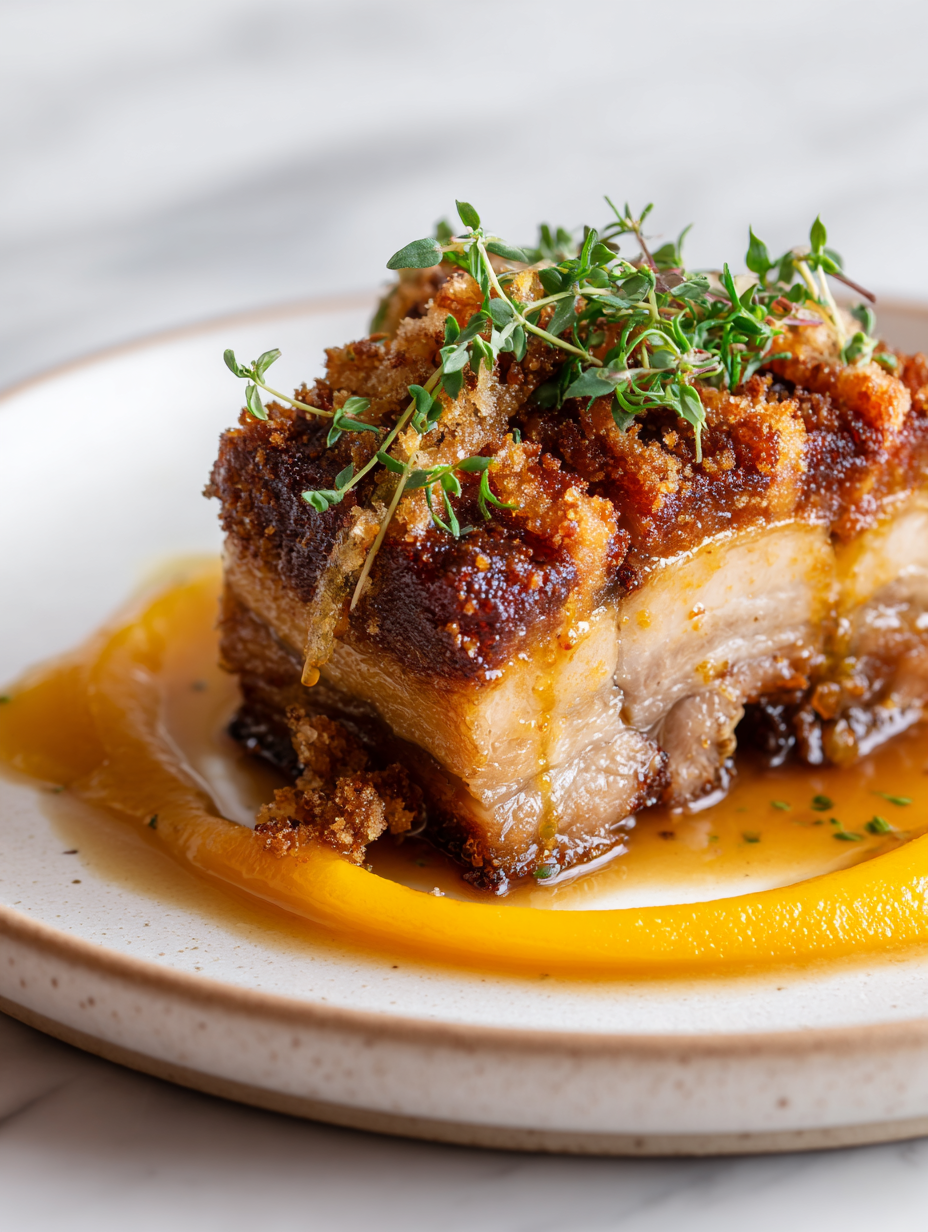
This dish is a dance of contrasts—crisp, fatty pork belly paired with a bright, tangy apple puree. I love how the richness of the meat is cut through by the tartness, making each bite feel balanced and lively. It’s one of those recipes that feels indulgent but still fresh enough for a special weeknight dinner.
I started playing around with this combo after a trip to a little bistro in France, where they served pork with a simple apple compote. That moment stuck with me—the way the acidity and sweetness of the apples cut through the fat without overpowering it. Now, I keep coming back to this pairing whenever I want something satisfying but not heavy.
Focusing on the balance of richness and brightness, this recipe explores how the crispy pork belly’s fat and savory depth are perfectly complemented by the tart, smooth apple puree—an unexpected but harmonious pairing that elevates comfort food into a dish of layered flavors.
Balancing richness with brightness
- Cooking this dish always reminds me of lazy Sunday afternoons, where the smell of crispy pork fills the house and makes everyone gather around.
- I used to be intimidated by pork belly, but now I see it as a forgiving, almost luxurious ingredient that rewards patience and good seasoning.
- The first time I made this, I was surprised how a simple apple puree could transform the entire plate into something unexpectedly elegant.
- There’s a quiet pride in mastering that perfect crackle on the pork belly—it’s like a small victory every time.
- Every time I serve this, I feel a little nostalgic, remembering how my grandmother used to cook with such honest, hearty flavors.
The story behind this recipe
- This dish came about during a chilly autumn evening when I was craving something hearty but with a bright twist. I wanted to play with the idea of fat and acidity—something unexpected that would elevate a simple pork belly. The apple puree was a happy accident, inspired by childhood memories of my mom’s apple pies, but turned into a savory complement instead.
- I remember the first time I cooked this for friends, watching their faces light up when they tasted that crispy crackle followed by the tangy, smooth apple. It’s funny how a humble ingredient like apple can transform into something sophisticated, almost like a secret handshake among home cooks.
- heading: ‘The story behind this recipe’
Historical and Cultural Tidbits
- Pork belly has been a prized cut in Asian cuisines for centuries, especially in Chinese and Filipino cooking traditions.
- The pairing of pork with apples dates back to medieval Europe, where apples were used to balance rich meats in hearty stews and roasts.
- In French cuisine, similar dishes with crispy pork and fruit sauces were often served during festive seasons, showcasing a love for contrasting textures and flavors.
Key Ingredients and Tips
- Pork belly: I love that rich, fatty layer—it’s like a flavor sponge. If you want less richness, try trimming some fat, but don’t lose that melt-in-your-mouth texture.
- Apple: The tartness really wakes up the dish. Use firm, tart apples like Granny Smith. Swap for softer apples if you prefer a sweeter, less tangy puree.
- Salt: I always season the pork generously—flesh needs salt to break down and develop flavor. Less salt if you’re watching your intake, but taste as you go.
- Vinegar: A splash of apple cider vinegar brightens the puree. Skip if you prefer milder, less tangy flavor, or substitute with lemon juice for a zestier kick.
- Herbs: Fresh thyme or sage add earthy notes. Dried works in a pinch, but fresh herbs really lift the dish—don’t skip them if you can.
- Oil: Use a neutral oil like vegetable or canola for crisping the pork skin. For extra flavor, try duck fat or bacon grease—think smoky, savory crackle.
- Sugar: Just a touch in the apple puree balances acidity. Omit if you want it less sweet, or add a pinch more for a sweeter, dessert-like finish.
Spotlight on key ingredients
Pork Belly:
- I love how the fat renders out, creating a melt-in-your-mouth texture. Look for a piece with an even layer of fat and skin that feels firm but pliable.
- Apple: The tartness is what makes this dish sing. Firm apples like Granny Smith release a bright, lemon-bright juice that’s perfect for the puree. Softer apples turn mushy too quickly.
Apple:
- During cooking, it becomes fragrant and slightly thickens, amplifying its tart, sweet aroma. It’s surprisingly forgiving—just mash and adjust acidity before serving.
- Pork Belly: The skin crackles when properly rendered, offering that satisfying crunch. It’s best when the skin is scored deep enough to allow salt to penetrate and promote crispiness.
Notes for ingredient swaps
- Pork Belly: I prefer skin-on for the crackle, but can substitute with pork shoulder for easier rendering. Expect less crisp skin, but still rich and flavorful.
- Apple: Use Granny Smith for tartness or Fuji for sweeter notes. You can swap with pears for a softer, mellow sweetness, but keep the tartness in mind.
- Salt: Coarse sea salt is ideal for crispy skin. Table salt can be used, but be mindful of over-salting—less is more.
- Vinegar: Apple cider vinegar brightens the puree. Lemon juice works as a milder, citrusy alternative, especially if you want less tang.
- Herbs: Fresh thyme or sage add depth. Dried herbs can substitute, but use half as much—they lose some of their punch when dried.
- Oil: Neutral oils like vegetable or canola are best for crisping. For a smoky flavor, try bacon grease or duck fat—think rich and savory crackle.
- Sugar: A pinch balances acidity in the apple puree. Omit if you prefer a more tart finish or replace with honey for floral sweetness.
Equipment & Tools
- Oven: To roast the pork evenly and develop crispy skin
- Heavy-bottomed skillet: To sear the pork skin and start crackling
- Roasting pan: To contain the pork during oven roasting
- Sharp knife: To score the pork skin and carve slices
- Saucepan: To cook and mash apples for the puree
- Spatula: To turn the pork and mash the apples
Step-by-step guide to pork belly with apple puree
- Preheat your oven to 150°C (300°F). Pat the pork belly dry, then score the skin lightly with a sharp knife, making sure not to cut into the meat. Rub the skin generously with salt, focusing on the scored areas, and season the meat side with salt, pepper, and herbs if using. Let it sit at room temperature for 20 minutes to help the salt work in.
- Heat a heavy-bottomed skillet over medium heat. Place the pork belly skin-side down. Let it cook undisturbed for 8-10 minutes, until the skin starts to crackle and turn golden brown. Adjust heat if it’s smoking excessively. If the skin isn’t crackling, increase the heat slightly and press down with a spatula for better contact.
- Transfer the pork belly to a roasting pan, skin side up. Roast in the oven for 2 hours, or until the meat is tender and the juices run clear when pierced. Check halfway—if the skin isn’t crispy enough, increase oven temp to 220°C (430°F) for the last 15 minutes, watching closely to avoid burning the skin.
- While the pork roasts, peel and chop apples—about 4 medium tart apples like Granny Smith. Place them in a saucepan with a splash of water, a teaspoon of sugar, and a splash of apple cider vinegar. Cook over medium heat for 15-20 minutes, mashing occasionally until smooth and fragrant. Adjust sweetness and acidity to taste.
- Remove the pork from the oven. Rest the meat for 10 minutes before slicing—this helps retain juiciness. During resting, keep the pork in a warm spot covered loosely with foil. Meanwhile, check the apple puree—if too thick, stir in a little warm water or cider to loosen it; if too thin, simmer for a few more minutes to thicken.
- Slice the pork belly into manageable pieces, aiming for crispy skin and tender flesh. Serve with a generous spoonful of warm apple puree on the side. Drizzle any pan juices over the slices for added richness and flavor.
- Finish with a sprinkle of flaky sea salt or fresh herbs if desired. Plate the pork belly with a swirl of apple puree, ensuring the contrast of textures and flavors is clear with each bite.
Let the pork rest covered loosely with foil for 10 minutes. Slice with a sharp knife, serve with warm apple puree arranged on the side or drizzled over. Finish with sea salt or herbs for added flavor.
How to Know It’s Done
- Pork skin: golden and crisp, crackles when pressed.
- Meat: tender, with juices running clear when pierced.
- Apple puree: smooth, tart, and fragrant, with a bright color.
Crispy Pork Belly with Tart Apple Puree
Ingredients
Equipment
Method
- Preheat your oven to 150°C (300°F). Pat the pork belly dry with paper towels, then score the skin deeply with a sharp knife, making sure not to cut into the meat. Rub salt generously into the scored skin and season the meat side with salt, pepper, and herbs if desired. Let it sit at room temperature for 20 minutes.
- Place a heavy-bottomed skillet over medium heat, add a tablespoon of neutral oil, and lay the pork belly skin-side down. Let it cook undisturbed for 8-10 minutes until the skin starts to crackle, turn golden, and crisp up. Press down gently with a spatula to ensure contact for even crackling.
- Transfer the pork belly to a roasting pan, skin side up. Roast in the oven for about 2 hours, or until the meat is tender and juices run clear. For extra crispness, increase oven temperature to 220°C (430°F) during the last 15 minutes, watching carefully to prevent burning.
- While the pork roasts, peel and chop the tart apples into chunks. Place them in a saucepan with a splash of water, a teaspoon of sugar, and a teaspoon of apple cider vinegar. Cook over medium heat, stirring occasionally, for 15-20 minutes until the apples are soft and fragrant. Mash with a spatula until smooth, then taste and adjust the sweetness or acidity as needed.
- Once the pork is cooked, remove it from the oven, tent loosely with foil, and let it rest for 10 minutes. During this time, if the apple puree is too thick, stir in a splash of warm water or cider to loosen it. If it’s too thin, simmer gently to thicken further.
- Slice the rested pork belly into pieces, aiming for a crispy skin top and tender meat underneath. Serve slices alongside a generous spoonful of the warm apple puree, drizzled with pan juices or fresh herbs if desired. Enjoy the delightful contrast of textures and flavors in every bite.
Notes
Pro tips for perfect pork belly
- Bolded: Start with a cold pan to achieve an even crackle on the pork skin.
- Bolded: Use a sharp knife to score the skin deeply, but avoid cutting into the meat to help render fat and crisp the skin.
- Bolded: Pat the pork dry thoroughly before seasoning—moisture is the enemy of crackling.
- Bolded: For extra crispiness, increase oven temperature to 220°C (430°F) for the last 15 minutes, watching closely.
- Bolded: When cooking apples, mash and cook until fragrant and thickened, but keep an eye on the sweetness balance—adjust with sugar or vinegar.
- Bolded: Rest the pork belly for at least 10 minutes after roasting—this helps retain juiciness and makes carving easier.
- Bolded: Serve immediately after resting to enjoy the contrast of crispy crackling and tender meat.
Common mistakes and how to fix them
- FOGGED: Too much salt can make pork belly tough. FIX: Use sparingly and taste as you go.
- DUMPED: Overcooking the pork leads to dryness. FIX: Check for tenderness, not just time.
- OVER-TORCHED: Burnt skin ruins texture. FIX: Keep a close eye on last-minute oven temp increase.
- MISSED: Not scoring the skin prevents crisping. FIX: Score the skin deeply but avoid the meat.
Quick Fixes and Pantry Swaps
- If skin isn’t crackling, increase heat and press down for better contact.
- When pork is overcooked, slice thinner and serve with extra apple puree for moisture.
- Dumped too much salt? Rinse pork briefly and start over with less seasoning.
- Over-torched skin? Splash with cold water quickly to stop burning and pat dry again.
- Shield apple puree with foil if it starts to thicken too much during reheating.
Prep, store, and reheat tips
- You can prepare the apple puree a day ahead; store in an airtight container in the fridge for up to 2 days. Reheat gently, stirring to restore smoothness and bright flavor.
- Season and score the pork belly the night before. Keep covered in the fridge; this helps the salt penetrate and enhances crispiness during roasting.
- Cooked pork belly can be refrigerated for up to 3 days. Reheat in a warm oven at 180°C (350°F) until warmed through and skin re-crisps, about 10-15 minutes.
- Leftover apple puree also keeps well in the fridge for 2 days. Reheat until steaming hot, and adjust consistency with a splash of water or cider if needed.
- To freeze, wrap both pork and puree tightly in plastic, then foil. Freeze for up to 1 month. Thaw overnight in the fridge and reheat as above, expecting a slight change in texture but still tasty.
Top questions about Pork Belly with Apple Puree
1. Can I substitute pork shoulder for pork belly?
Yes, using pork shoulder will give a similar flavor but won’t have that signature crackling. It’s still juicy and tender, just less crispy skin.
2. What type of apples should I use?
Apple varieties like Granny Smith or Bramley work best because they’re tart and hold up well during cooking. Softer apples tend to turn mushy or too sweet.
3. How do I get crispy pork skin?
Ensure the pork skin is scored deeply enough so the salt can penetrate and help it crisp up. Also, dry the skin thoroughly before roasting.
4. How do I know when the pork is done?
Cook the pork until the internal temperature reaches about 70°C (160°F) or until the meat is tender and juices run clear. Resting helps keep it juicy.
5. What if my apple puree is too thick or thin?
If your apple puree is too thick, add a splash of warm water or cider and stir until smooth. If it’s too runny, simmer a bit longer to thicken.
6. How should I score the pork skin?
Use a sharp knife to score the pork skin deeply, but avoid cutting into the meat, to help render fat and create that crackle.
7. How do I reheat pork belly without losing crispness?
Reheat leftovers gently in a warm oven at 180°C (350°F) for about 10-15 minutes, and re-crisp the skin under the broiler if needed.
8. Can I make the apple puree in advance?
You can prepare the apple puree a day ahead and keep it refrigerated. Reheat gently and stir before serving to restore brightness.
9. What if the skin isn’t crackling properly?
If the skin isn’t crackling, increase oven temperature at the end and press down with a spatula to promote contact and crispness.
10. How can I ensure even crispiness of the skin?
Use a heavy skillet for initial searing, and roast on a wire rack in the oven to promote even crisping and prevent sogginess.
This dish is a reminder that simple ingredients can come together in surprising ways. The crispy pork skin and bright apple puree are a pairing I keep coming back to, especially when I want comfort with a fresh twist.
Cooking it feels like a small act of celebration—cracking that crackle, tasting the tang of the apples. It’s a dish that’s honest, unpolished, but always satisfying in its layered flavors and textures.

Hi, I’m Daniel Whitaker, the voice behind Micromanaging Flavor. For me, micromanaging flavor is not about perfectionism. It is about paying attention. It is about understanding the small adjustments that turn a good dish into a great one. This blog is my space to explore those details and share what I learn along the way.
