
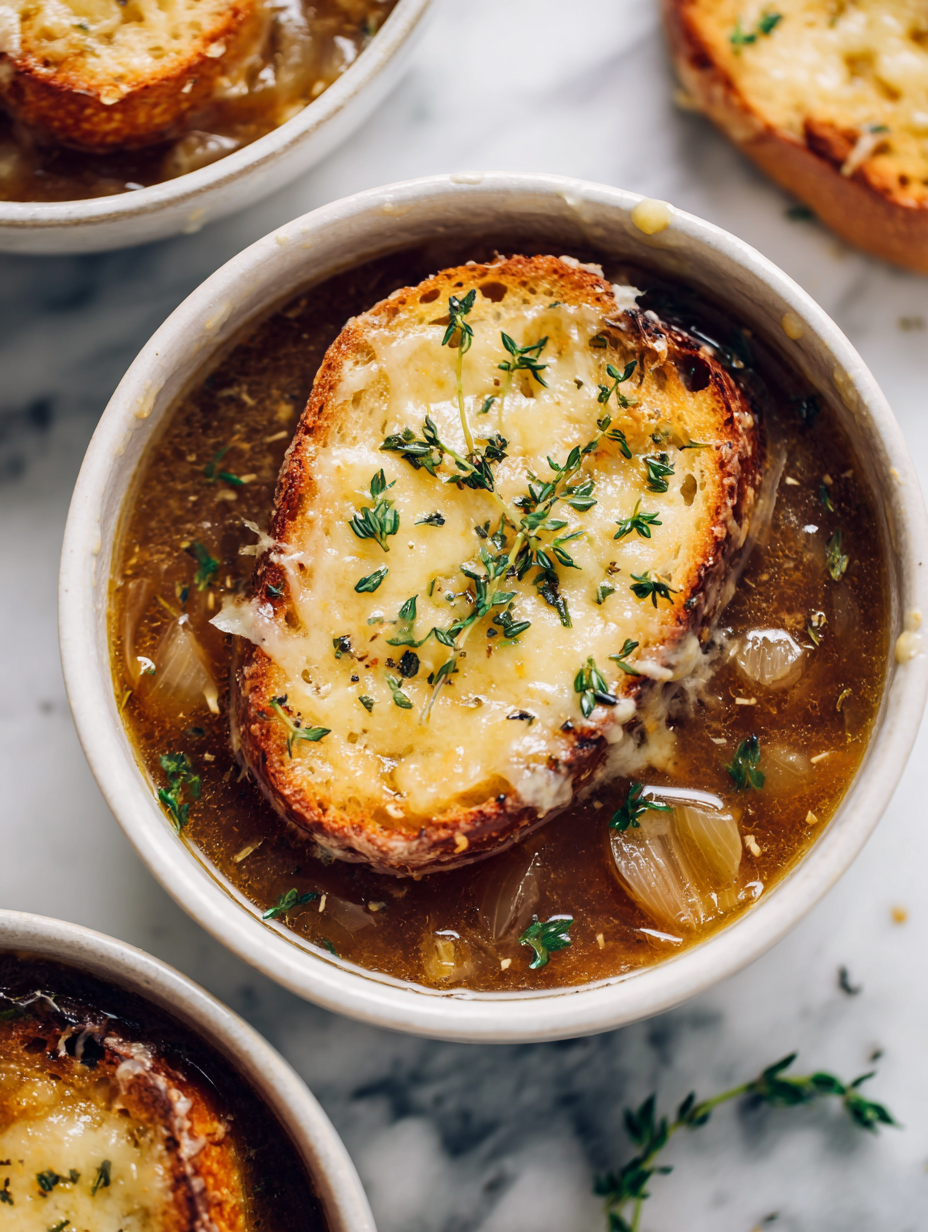
Making French Onion Soup is like a quiet meditation in the kitchen. It’s about patience—watching those onions slowly turn golden and sweet, filling the house with a warm, caramelized aroma. It’s a ritual that demands your attention, but the reward is a bowl of deeply savory, soulful comfort that feels like a small act of care.
This recipe isn’t about rushing. It’s about embracing the slow, deliberate process—stirring, scraping, waiting, until every slice of onion has surrendered its water and transformed into something richer. When you finally ladle the soup into a bowl, topped with crusty bread and bubbling cheese, it’s a moment of quiet pride. That patience makes each spoonful taste even sweeter.
Focusing on the patience and ritual involved in making perfect caramelized onions, this recipe explores how the slow, deliberate process transforms humble ingredients into a rich, soulful soup. It’s about reconnecting with the meditative act of cooking, turning a simple dish into a mindful, almost sacred experience.
The meditative ritual of caramelizing
- Cooking this soup always reminds me of my grandma’s kitchen, where the air was thick with the smell of slow-cooked onions and toasted bread.
- There’s a quiet thrill in watching the onions melt into a sweet, jammy mass after so much patience—it’s almost meditative.
- I love how the bubbling cheese on top sparks a bit of chaos, but then settles into that perfect gooey crown.
- Nothing beats the comforting warmth that hits your nose first—sweet caramelized onions and melting Gruyère—before the first spoonful.
- This dish makes me proud every time I see the golden-brown crust and hear that gentle crackle when I serve it.
The story behind this recipe
I first made this soup during a chilly autumn weekend, craving something warm and honest. The slow caramelization of onions became a quiet ritual in my kitchen, almost like a meditation. It’s funny how a simple dish can take you back—reminding me of cozy evenings with family, sharing stories over bowls of bubbling cheese and sweet, tender onions. Every time I make it, I feel a little more grounded, a little more connected to those quiet, everyday moments.
French Onion Soup Trivia
- French Onion Soup dates back to Roman times, where caramelized onions were a humble, hearty meal for peasants.
- The classic gratin top with melted cheese was popularized in Parisian bistros in the early 20th century, becoming a symbol of comfort food.
- Historically, this dish was a way to make old bread and onions into something nourishing, especially during hard times.
- Gruyère cheese, often used today, was originally a Swiss ingredient, but has become iconic in French recipes, adding a nutty, gooey richness.
- The slow caramelization process was once considered a secret technique for developing deep, complex flavors in traditional French cuisine.
Ingredient breakdown: key components
- Yellow onions: I go for sweet, golden onions—they turn soft, jammy, and deeply caramelized, filling the kitchen with a warm, inviting smell. Swap for red or shallots if you want a slightly milder, less sweet flavor.
- Beef broth: I prefer homemade or a good-quality store-bought beef broth—rich, meaty, and full-bodied. For a lighter twist, try vegetable broth, but expect a more delicate flavor that needs extra seasoning.
- Dry white wine: I use a splash of dry white wine to add a bright, slightly acidic note that balances the sweetness. Skip it if you prefer a non-alcoholic version, but you might lose that subtle complexity.
- Gruyère cheese: I love the nutty, gooey melt of Gruyère on top—go for a good melting cheese. If you’re dairy-free, try a sharp vegan cheese, but it won’t quite have that same richness.
- Baguette slices: I toast thick slices until crispy—crackly on the outside, tender inside. Use day-old bread if fresh is scarce; it’ll toast up just as well and hold the cheese better.
- Butter & oil: I use a mix for the caramelization—rich, fragrant, and helps onions brown evenly. Cut back if you want less richness, but don’t skip the butter entirely for flavor.
- Herbs (thyme & bay leaf): I toss in fresh thyme and bay for a subtle herbal lift. Dried herbs work, but fresh herbs make a brighter, more vibrant broth that really sings.
Spotlight on key ingredients
Yellow onions:
- I love how they turn sweet and jammy as they caramelize, filling the kitchen with a warm, inviting aroma. Swap for red onions if you want a sharper, less sweet note.
- Beef broth: I prefer a rich, homemade or good-quality store-bought beef broth—full-bodied and meaty. For a lighter approach, vegetable broth works, but you may need to season more generously.
Gruyère cheese and baguette:
- Gruyère cheese: I adore its nutty, melt-in-your-mouth quality when bubbling on top. If dairy-free, a sharp vegan cheese can work, but it won’t have the same depth.
- Baguette slices: I toast thick slices until crackly outside and tender inside—perfect for holding the cheese. Day-old bread can be a good substitute, adding texture without waste.
Notes for ingredient swaps
- Sweet onions: I prefer yellow or Vidalia—they turn soft and sweet, giving that classic depth. You can swap in red onions if you want a sharper, more pungent note.
- Broth: I use a rich homemade beef stock—deep, meaty, with a slight saltiness. For a lighter or vegetarian version, vegetable broth works, but you might need to boost the seasoning.
- Wine: I add a splash of dry white wine for brightness—if you skip it, the soup will be less layered but still flavorful. Lemon juice can brighten instead if you want acidity without alcohol.
- Cheese: Gruyère melts into a gooey, nutty crown—if you’re dairy-free, try a sharp vegan cheese, though it won’t melt as smoothly or taste quite the same.
- Bread: I toast rustic baguette slices until crisp—if you’re out, day-old sourdough or country bread works just as well, adding good texture and flavor.
- Butter & oil: I blend for richness—skip the butter for a leaner soup, but expect less caramelization and depth in flavor.
- Herbs: Fresh thyme and bay leaf give subtle herbal notes—dried herbs can be used, but fresh really wakes up the broth with vibrant aromatics.
Equipment & Tools
- Heavy-bottomed soup pot: Ensures even heat for slow caramelization.
- Wooden spoon: Gentle stirring to prevent sticking and promote even browning.
- Sharp knife and cutting board: Slices onions uniformly for consistent cooking.
- Oven-safe bowls or crocks: For broiling cheese directly on the soup.
- Ladle: Serves the soup neatly and safely.
Step-by-step guide to French Onion Soup
- Equipment & Tools: Gather a heavy-bottomed soup pot (for even heat), a wooden spoon (for gentle stirring), a sharp knife and cutting board (for slicing onions), oven-safe bowls or crocks (for broiling cheese), and a ladle (for serving).
- Slice onions thinly and evenly—about 0.3 cm (1/8 inch)—so they cook uniformly.
- Heat the pot over medium-low (about 150°C/300°F). Add 2 tbsp butter and 1 tbsp olive oil. Once melted and shimmering, add the onions.
- Cook onions slowly, stirring frequently, for about 45-60 minutes. They should turn a deep, golden brown—sweet and jammy. If they start to stick, add a splash of water or broth.
- Once onions are caramelized, deglaze the pan with 1/4 cup dry white wine (optional). Scrape up browned bits for flavor. Cook until wine reduces slightly, about 2 minutes.
- Add 4 cups beef broth (or veggie for lighter). Toss in a sprig of thyme and a bay leaf. Bring to a gentle simmer—about 20 minutes—allowing flavors to meld.
- Taste and adjust salt and pepper. Remove herbs. Ladle hot soup into oven-safe bowls or crocks.
- Top each with a slice of toasted baguette—about 1–2 cm thick. Cover generously with shredded Gruyère cheese, pressing it into the bread.
- Place bowls on a baking sheet and broil in the oven at high (about 220°C/430°F) until cheese is bubbling and golden, about 3-5 minutes. Watch carefully to avoid burning.
- Remove from oven. Let sit for 2 minutes—cheese will be molten and tempting. Serve immediately, garnished with a sprig of thyme if desired.
- For serving, you can also lightly torch the cheese for a crisp top—just a quick pass with a kitchen torch for extra texture.
Let the soup sit for 2 minutes after broiling so the cheese sets slightly. Serve straight from the oven, garnished with herbs if desired. The cheese should be gooey and slightly crispy around the edges, and the broth hot and fragrant.
How to Know It’s Done
- Onions are deeply caramelized, rich, and jammy—deep golden brown, no raw onion smell.
- Broth is hot, fragrant, and slightly reduced, with a balanced savory depth.
- Cheese is melted, bubbling, and golden, with a slightly crispy edge around the bread.
French Onion Soup
Ingredients
Equipment
Method
- Gather all your ingredients: thinly slice the onions, measure out the broth, and toast the bread slices until golden and crispy.
- In a large heavy-bottomed pot, melt the butter with olive oil over medium-low heat. Add the sliced onions and cook gently, stirring frequently, until they become soft and start to turn golden, about 20 minutes.
- Continue cooking the onions slowly, stirring often, for about 40-45 minutes until they are deeply caramelized and a rich golden brown, filling your kitchen with a sweet, toasty aroma.
- Deglaze the pan by pouring in the white wine, scraping up any browned bits from the bottom with your spoon, and cook for 2 minutes until the wine has reduced slightly.
- Add the beef broth, bay leaf, and thyme sprig. Bring the mixture to a gentle simmer and cook uncovered for about 20 minutes to meld the flavors. Remove the herbs before serving.
- While the soup simmers, preheat your broiler. Arrange the toasted baguette slices on a baking sheet and sprinkle generously with shredded Gruyère cheese. Broil until bubbling and golden, about 3-5 minutes.
- Ladle the hot soup into oven-safe bowls or crocks. Top each with a cheesy toasted bread slice, pressing it gently into the soup to soak up some broth.
- Place the bowls on a baking sheet and broil in the oven for another 2-3 minutes until the cheese is bubbly and golden brown. Keep a close eye to prevent burning.
- Carefully remove the bowls from the oven, let sit for a minute to cool slightly, then serve immediately. Enjoy the bubbling cheese and fragrant, savory broth in each spoonful.
Notes
Pro tips for perfect French Onion Soup
- caramelization: Use low heat and patience—slowly browning onions develops deep, sweet flavor.
- deglazing: Scrape up browned bits with wine or broth to infuse richness into the soup.
- cheese layering: Cover the toasted bread generously with shredded Gruyère—more cheese means gooier, more satisfying bites.
- broiling: Keep a close eye when melting cheese—just until bubbly and golden, to avoid burning.
- onion prep: Slice onions uniformly—thin enough for even caramelization without burning edges.
- seasoning: Taste after adding broth—adjust salt and pepper to balance the sweetness and savoriness.
- resting: Let the soup sit a minute after broiling—cheese sets slightly, and flavors meld for the best bite.
Common mistakes and how to fix them
- FORGOT to stir onions evenly → Use a wooden spoon for gentle, consistent caramelization.
- DUMPED too much heat early → Keep heat low for slow, even browning without burning.
- OVER-TORCHED cheese → Watch broiling closely; cheese should be golden, not burnt.
- MISSED deglazing step → Scrape up browned bits for depth and rich flavor.
Quick fixes and pantry swaps
- If onions aren’t caramelizing evenly, lower the heat and stir more frequently.
- Splash a little water if onions stick to the pan during slow cooking.
- Patch burnt cheese with a quick sprinkle of fresh cheese and broil briefly again.
- Shield the soup with foil if the cheese browns too fast during broiling.
- When in doubt, swap beef broth for vegetable broth—less rich, but still flavorful.
Prep, store, and reheat tips
- Caramelized onions can be made up to 2 days ahead; store in an airtight container in the fridge for up to 48 hours. The rich aroma and soft, sweet texture intensify over time.
- Soup base (broth and onions) can be refrigerated for 1-2 days. Reheat gently on the stovetop over low heat, stirring occasionally until hot and fragrant again.
- Assemble topped with cheese and bread just before broiling. You can prepare these components separately and keep them in the fridge for a few hours—cheese chilled, bread kept in a bread box or loosely wrapped.
- Reheat leftovers in a saucepan over low heat, stirring gently. Expect the onions to soften further and flavors to deepen, with a slightly thicker consistency.
- For longer storage, freeze the soup (without bread or cheese) in airtight containers for up to 2 months. Thaw in the fridge overnight and reheat slowly, checking for even warmth and aromatic richness.
Top questions about French Onion Soup
1. How do I prevent the onions from burning while caramelizing?
Use a thick-bottomed pot and cook onions slowly over low heat to prevent burning and ensure even caramelization.
2. Why should I deglaze the pan after caramelizing onions?
Deglazing with wine or broth helps lift the flavorful browned bits from the pan, adding depth to the soup.
3. How do I know when the onions are properly caramelized?
Look for deep golden brown onions that are soft and jammy, with a sweet aroma filling your kitchen.
4. What’s the best way to check if my broth is flavorful enough?
Broth should be hot and fragrant, with a balanced savory aroma. It should taste rich and well-seasoned.
5. Can I substitute Gruyère cheese with a vegan or different cheese?
Use a good melting cheese like Gruyère for that gooey, nutty topping. For dairy-free, try vegan cheeses but expect less meltiness.
6. What kind of bread works best for the topping?
Slice bread evenly and toast until crispy and golden. Use day-old bread if fresh isn’t available; it holds up better under cheese.
7. How long should I broil the cheese for perfect bubbling and color?
Broil in the oven until cheese bubbles and turns golden, about 3-5 minutes, but keep a close eye to avoid burning.
8. How should I reheat leftover French Onion Soup?
Reheat leftovers slowly on the stove, stirring gently. Expect the onions to soften further and flavors to deepen.
9. Can I prepare the onions in advance?
Caramelized onions can be prepared a day ahead, stored in the fridge, and used to save time on busy days.
10. What if my cheese isn’t melting properly during broiling?
If cheese isn’t melting well, increase broil time slightly or sprinkle more cheese on top before broiling again.
This soup isn’t just about the deep caramel flavor or the bubbling cheese—it’s about the quiet act of patience. Every step, from slicing onions to broiling cheese, feels like a small meditation, grounding me in the moment. It’s a dish that reminds me how simple ingredients, treated with care, can become something truly nourishing.
In the end, it’s the warmth of the caramelized onions and the gooey cheese that linger longest. Making this soup feels like a small act of kindness—something warm and familiar in a chaotic world. It’s a dish that invites you to slow down and savor the quiet, rich moments in life.

Hi, I’m Daniel Whitaker, the voice behind Micromanaging Flavor. For me, micromanaging flavor is not about perfectionism. It is about paying attention. It is about understanding the small adjustments that turn a good dish into a great one. This blog is my space to explore those details and share what I learn along the way.
