
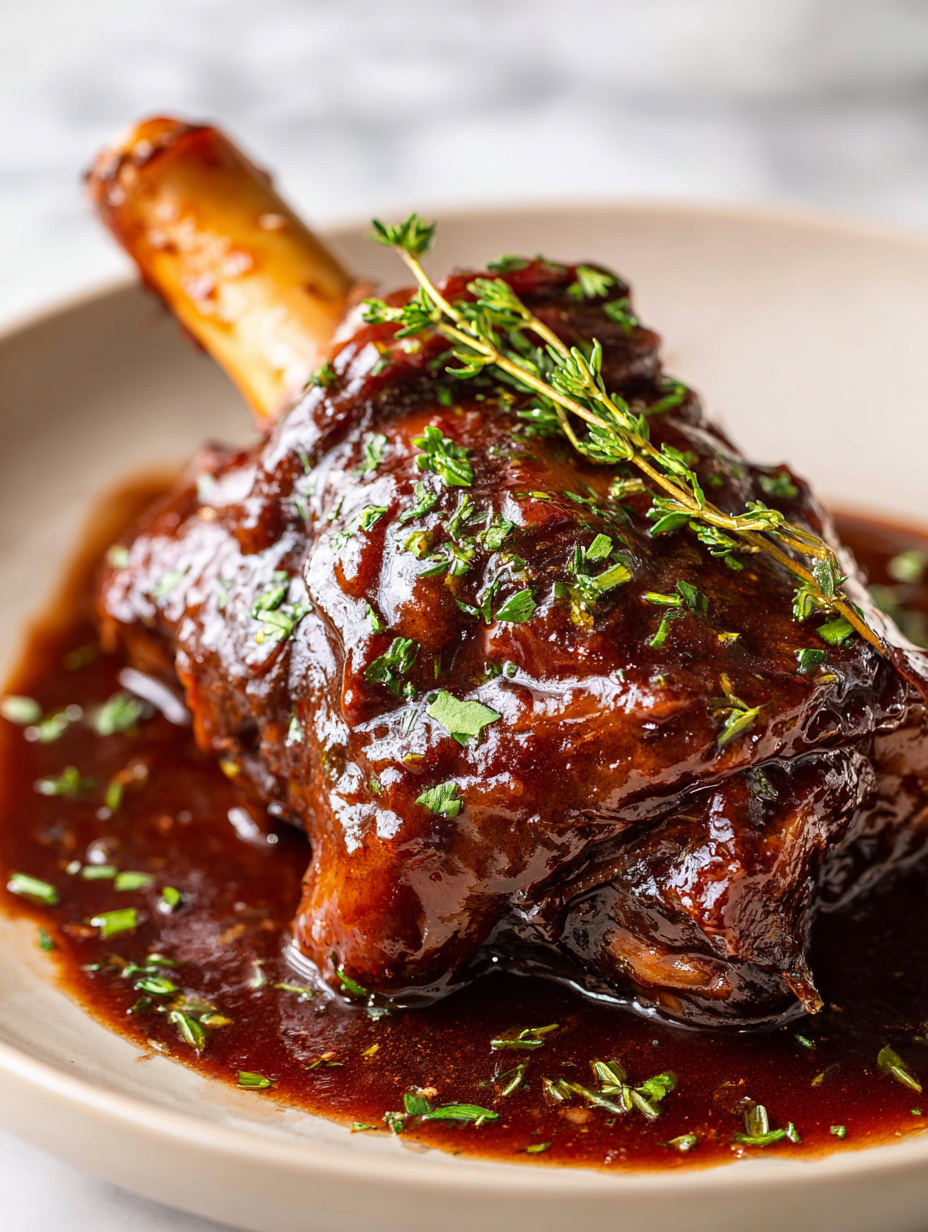
Cooking lamb shanks isn’t just about the end flavor; it’s about the whole sensory experience—the sound of them browning, the rich aroma that fills the kitchen as the red wine reduces, and the way the meat becomes so tender it almost falls apart in your hand. I love how this dish transforms simple ingredients into something deeply satisfying, almost primal in its pleasure.
There’s something about the slow simmer, the way the wine’s tannins and spices mingle with the lamb’s natural richness, that makes the whole process feel like a small ritual. Every time I make this, I find myself leaning into the smell, the crackle of the sear, the shimmer of the sauce, and knowing that the reward is that melt-in-your-mouth bite, full of deep, layered flavors. It’s one of those recipes that sticks with you long after the plates are cleared.
Focusing on the sensory journey of cooking lamb shanks, emphasizing the aroma of the red wine sauce as it bubbles and the tender, falling-off-the-bone texture that makes every bite memorable.
A Sensory Journey in Every Bite
- Cooking this dish always reminds me of cozy Sunday afternoons at my grandma’s, where the smell of lamb filled the house and lingered long after dinner.
- There’s a strange joy in watching the wine reduce into a rich, dark sauce that clings to the meat—like a hug in every bite.
- I love how the slow braise turns tough shanks into something so tender it practically melts in my mouth, making all the prep worth it.
- The aroma of garlic, rosemary, and red wine bubbling together makes my kitchen feel like a small, warm sanctuary.
- Every time I make this, I feel a quiet pride—like I’ve created something that’s both simple and deeply satisfying.
A Memory in Every Bite
- Making lamb shanks with red wine sauce started from a desire to capture the slow, comforting process I experienced during a trip to Provence. There, the aroma of simmering wine and herbs filled the air, wrapping me in a sense of calm I wanted to recreate at home. It’s about turning humble ingredients into a dish that feels like a warm hug, especially on cold evenings when the world slows down.
- This recipe is my way of holding onto that memory—the way the meat becomes so tender it practically falls off the bone, and how the sauce thickens into something glossy and rich, almost velvety. It’s a dish that demands patience, but rewards you with deep, layered flavors that linger long after the last bite.
- heading: ‘A Memory in Every Bite’
Historical & Cultural Tidbits
- Lamb shanks have been a traditional ingredient in Mediterranean and Middle Eastern cuisines for centuries, valued for their rich flavor and economical cut.
- The slow braising technique used here is rooted in classic French and Italian cooking, where tough cuts become tender through long, gentle cooking in wine or broth.
- Red wine sauces like this one originated as a way to elevate humble cuts, turning them into festive, celebratory dishes in European kitchens.
- In medieval Europe, lamb was often reserved for special occasions, and slow-cooked shanks became a symbol of hearty, communal feasts.
- The use of herbs like rosemary and thyme in this dish reflects ancient herbal remedies, believed to aid digestion and improve flavor harmony.
Ingredient breakdown: key components
- Lamb shanks: I love how they turn from tough to tender after slow braising; look for well-marbled, meaty shanks that feel heavy in your hand—perfect for soaking up all that wine and herbs.
- Red wine: Use a decent bottle, not necessarily expensive, but one you’d enjoy drinking—think dark berry notes and a touch of tannin that enriches the sauce’s depth.
- Garlic: Fresh cloves crushed or sliced, they release a pungent aroma that intensifies beautifully as they cook—don’t skimp, it’s the flavor backbone here.
- Rosemary and thyme: Fresh herbs add a fragrant, piney note that cuts through the richness—if dried, use half as much; the fresh stuff makes a noticeable difference.
- Carrots and onions: These form the base, their sweetness balancing the wine’s acidity—chop them roughly, and let their aroma fill the kitchen as they soften.
- Beef or chicken stock: I prefer homemade or low-sodium store-bought—this adds a savory backbone that ties the sauce together without overpowering the lamb.
- Olive oil: Good quality, fruity and slightly peppery—use it to sear the shanks until they develop a deep, crackling crust that’s packed with flavor.
Spotlight on key ingredients
Lamb shanks:
- I love how they transform from tough to tender after slow braising; look for well-marbled, meaty shanks that feel heavy in your hand—perfect for soaking up all that wine and herbs.
- Red wine: Use a decent bottle, not necessarily expensive, but one you’d enjoy drinking—think dark berry notes and a touch of tannin that enriches the sauce’s depth.
Red wine:
- I favor a robust, dark variety with rich fruit and a hint of spice—avoid overly sweet or cheap bottles, as they can dull the sauce’s complexity.
- Herbs (rosemary & thyme): Fresh sprigs release piney, fragrant oil that intensifies as they cook—dried can work, but they lack that lively aroma and punch.
Notes for ingredient swaps
- Red wine: Switch to a dry Marsala or sherry if you prefer a sweeter, nutty note—just cut back slightly on sugar if using sweet varieties.
- Lamb shanks: Use beef short ribs or pork shoulder for a similar melt-in-your-mouth texture, but expect a different flavor profile and slightly different cooking times.
- Fresh herbs: Dried rosemary or thyme can replace fresh—use about half the amount and add earlier to develop flavor.
- Stock: Replace with vegetable broth for a lighter, plant-based option that still adds depth—expect a more delicate sauce.
- Olive oil: Swap for butter for a richer, creamier sear, especially if you like a more decadent base for your sauce.
- Vegetables: Turnip or parsnip can substitute carrots for a slightly earthier sweetness—use similar chopping size for even cooking.
- Additional flavor: A splash of balsamic vinegar at the end can add a subtle tang and deepen the sauce’s complexity—use sparingly.
Equipment & Tools
- Dutch oven or large skillet: For even heat during searing and braising.
- Tongs: To handle and turn the shanks without piercing the meat.
- Wooden spoon or spatula: For scraping browned bits and stirring vegetables.
- Ladle: To transfer liquids and serve the sauce.
- Oven: For controlled, slow cooking at consistent temperature.
Step-by-step guide to braising lamb shanks
- Equipment & Tools: Use a heavy Dutch oven or large, deep skillet with a lid—this ensures even heat and retains moisture during braising.
- Preheat your oven to 160°C (320°F). Season the lamb shanks generously with salt and pepper. Heat a tablespoon of olive oil over medium-high heat until shimmering. Sear the shanks in batches, about 4-5 minutes per side, until deeply golden—look for a rich crust and a nutty aroma. Transfer to a plate.
- In the same pot, add chopped onions and carrots. Cook over medium heat until softened, about 8 minutes, stirring often—smell that sweet, earthy aroma. Add minced garlic and cook for another minute until fragrant. If the veggies stick, scrape up browned bits; they add flavor.
- Pour in a good splash of red wine (about 1 cup). Bring to a simmer and cook until reduced by half, about 10 minutes. The wine should turn glossy and fragrant, with a hint of acidity. Scrape any remaining browned bits from the bottom for richness.
- Return the lamb shanks to the pot. Add sprigs of rosemary and thyme, along with enough stock (about 2 cups) to come halfway up the meat. Bring to a gentle simmer. Cover with a lid and transfer to the oven. Cook for 2.5 to 3 hours, until meat is fall-apart tender—check occasionally to ensure liquid covers the shanks.
- During cooking, the sauce should thicken slightly and develop a deep, ruby hue. If it reduces too much, add a splash of hot water or stock. If it’s too thin at the end, remove the shanks and simmer the sauce on the stovetop for 10-15 minutes until glossy.
- Remove the shanks from the oven. Let them rest in the sauce for 10 minutes—this helps the meat reabsorb juices. Taste and adjust seasoning with salt and pepper. Serve hot, spooning generous amounts of sauce over each shank.
Let the lamb shanks rest in the sauce for 10 minutes. Then, carefully plate each shank, spooning extra sauce over the top. Garnish with a sprig of fresh herbs if desired. Serve with crusty bread or creamy mashed potatoes to soak up the flavorful sauce.
How to Know It’s Done
- Meat: Should be so tender it falls off the bone with a gentle tug.
- Sauce: Deep, glossy, and aromatic, with a balanced acidity and richness.
- Color: Lamb shanks should be deeply browned on the outside, with a caramelized crust.
Lamb Shanks with Red Wine Sauce
Ingredients
Equipment
Method
- Preheat your oven to 160°C (320°F). Season the lamb shanks generously with salt and pepper.
- Heat a tablespoon of olive oil in your Dutch oven over medium-high heat until shimmering. Place the shanks in the pot and sear until deeply golden brown, about 4-5 minutes per side, until a rich crust forms and you can smell that nutty aroma.
- Transfer the seared shanks to a plate. In the same pot, add chopped onions and carrots, cooking over medium heat until softened and fragrant, about 8 minutes. Stir occasionally to release their sweet aroma and scrape up any browned bits.
- Add minced garlic to the vegetables and cook for another minute until fragrant, filling your kitchen with a warm, savory smell.
- Pour in the red wine and bring to a gentle simmer, scraping the bottom of the pot to loosen browned bits. Let it reduce by half, about 10 minutes, until the wine turns glossy and fragrant.
- Return the lamb shanks to the pot, placing them on top of the vegetables. Add sprigs of rosemary and thyme, then pour in the stock to come halfway up the meat. Bring to a gentle simmer.
- Cover the pot with a lid and transfer to the oven. Braise for 2.5 to 3 hours, checking occasionally to ensure the liquid covers the meat. The meat should become fall-apart tender and the sauce deep and glossy.
- Once cooked, carefully remove the shanks and set aside. Place the pot back on the stove over low heat and simmer the sauce until thickened and aromatic, about 10-15 minutes. Adjust seasoning with salt and pepper if needed.
- Return the lamb shanks to the sauce, letting them soak up all the rich flavors for a few minutes. Then, serve hot, spooning the glossy sauce over each shank, garnished with fresh herbs if desired.
Pro tips for perfect lamb shanks
- Bolded mini-head: Sear thoroughly → Aim for a deep, caramelized crust to develop rich flavors and prevent sticking.
- Bolded mini-head: Deglaze with wine → Use enough wine to loosen browned bits, creating a flavor-packed base for your sauce.
- Bolded mini-head: Reduce gently → Simmer the wine until it’s glossy and aromatic, avoiding scorching or bitterness.
- Bolded mini-head: Check for fall-off tenderness → The meat should easily pull away from the bone, signaling perfect doneness.
- Bolded mini-head: Rest in sauce → Let the shanks sit for 10 minutes after cooking to re-absorb juices and deepen flavor.
- Bolded mini-head: Adjust seasoning at the end → Taste and add salt or a splash of vinegar to balance richness and acidity.
Common mistakes and how to fix them
- FORGOT to brown the shanks thoroughly → Sear until deeply golden for rich flavor development.
- DUMPED the wine directly into hot oil → Deglaze with wine after searing, scraping browned bits for depth.
- OVER-TORCHED the sauce at the end → Reduce gently on low heat to avoid burning and preserve flavor.
- FAILED to check meat tenderness → Test with a fork; meat should be falling apart easily.
Quick Fixes and Pantry Swaps
- When sauce is too thin, splash in a little cold water and simmer until glossy.
- If wine reduces too quickly, shield the pan with foil to prevent burning.
- Splash extra oil if shanks stick during searing; maintain high heat for a crisp crust.
- Patch over under-seasoned sauce with a pinch of salt and a squeeze of lemon for brightness.
- Shield shanks with foil if they start over-torching during the final simmer to avoid bitterness.
Prep, store, and reheat tips
- You can prep the vegetables and sear the lamb shanks a day in advance; store in the fridge for up to 24 hours. The aroma of browned meat and caramelized veggies makes the kitchen smell inviting even before braising.
- The stew can be made entirely a day ahead. Keep it in an airtight container in the fridge for up to 2 days. Reheat gently on the stovetop, allowing the sauce to shimmer and thicken again as it warms.
- Leftovers develop deeper flavor overnight. The meat stays tender, and the sauce intensifies, becoming even richer. Just reheat slowly, stirring occasionally, until hot and glossy.
- For longer storage, freeze in portions for up to 3 months. Expect a slight change in texture—meat might be a little softer, and the sauce may lose some brightness. Thaw in the fridge and reheat gently, watching for bubbling and aroma.
Top questions about Lamb Shanks with Red Wine Sauce
1. How do I choose the best lamb shanks?
Look for shanks that feel heavy for their size, with a good amount of marbling, which ensures tenderness after slow cooking.
2. What kind of wine should I use for the sauce?
A dry, full-bodied red wine like Cabernet Sauvignon or Merlot works well; avoid cooking with cooking wines or overly sweet varieties.
3. How important is searing the meat first?
Brown the shanks until deeply golden, about 4-5 minutes per side, to develop rich, caramelized flavors that deepen the sauce.
4. How long does it take to cook the lamb shanks?
Simmer the shanks at around 160°C (320°F) in the oven for about 2.5 to 3 hours until the meat is fall-apart tender.
5. My sauce is too runny. What do I do?
If the sauce is too thin, simmer it on low heat until glossy; if too thick, stir in a splash of hot stock or water.
6. Can I use dried herbs instead of fresh?
Use fresh herbs like rosemary and thyme; dried can work but add earlier for full flavor. Fresh herbs release more aromatic oils during cooking.
7. Should I rest the meat after cooking?
Allow the cooked shanks to rest in the sauce for about 10 minutes; this helps the juices redistribute and enhances tenderness.
8. How should I store and reheat leftovers?
Store leftovers in an airtight container in the fridge for up to 2 days; reheat gently to preserve tenderness and flavors.
9. What if my sauce starts sticking or burning?
If the sauce sticks or burns, splash with a bit of water or wine and gently scrape up browned bits to restore flavor.
10. Can I adjust the acidity of the sauce?
For a richer flavor, add a splash of balsamic vinegar at the end of cooking to deepen the sauce’s complexity and add brightness.
This dish isn’t just about tender lamb in a rich, wine-infused sauce; it’s about the deep, comforting smell that takes over your kitchen. Every bite is a reminder of slow afternoons and good company, even if you’re just cooking for yourself. It’s a dish that feels like a small celebration of simple ingredients turned extraordinary.
In a world that’s constantly rushing, taking the time to savor a slow-cooked lamb shank can ground you in the moment. The aroma, the textures, the layered flavors—all come together to make a meal that’s both humble and luxurious. Sometimes, that’s all you need to turn an ordinary day into something memorable.

Hi, I’m Daniel Whitaker, the voice behind Micromanaging Flavor. For me, micromanaging flavor is not about perfectionism. It is about paying attention. It is about understanding the small adjustments that turn a good dish into a great one. This blog is my space to explore those details and share what I learn along the way.
