
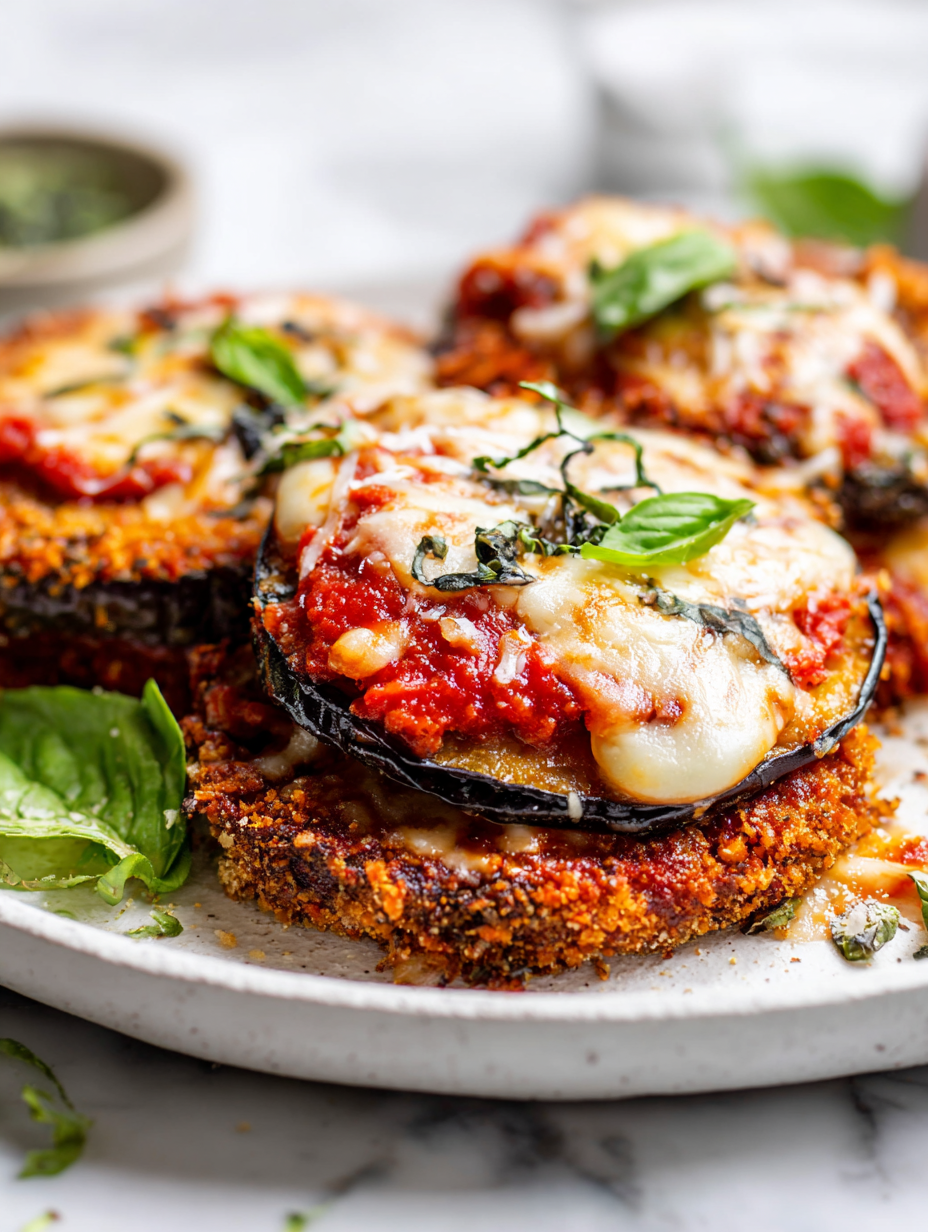
Eggplant Parmesan often gets a reputation for being finicky—frying, breading, layering—sounds complicated, right? But honestly, it’s one of those dishes that forgivingly adapts to what you have on hand. No need for perfect slices or fancy cheese; just a good eye for what’s ripe and a little patience with the oven.
I’ve learned over years that this dish is less about perfection and more about the feel of it—the crispy edges, the melty cheese, the tender eggplant soaking up all those rich tomato flavors. It’s a meal that invites improvisation, whether you’re using fresh basil or whatever cheese is lingering in the fridge. That flexibility makes it accessible, even for kitchen newbies.
Most of all, eggplant Parmesan feels like a cozy, imperfect project that rewards your effort with comfort and a mess of textures. It’s a dish that reminds me to loosen up, trust my instincts, and enjoy the process, especially when life feels a little chaotic.
Focusing on how eggplant Parmesan can be a forgiving dish for home cooks, emphasizing improvisation with ingredients and techniques, making it accessible and adaptable even for those new to baking or frying.
Imperfectly Perfect Eggplant
- I used to shy away from frying eggplant, but now I see it as part of the fun—crisp edges and smoky aroma make it worth every splatter.
- There’s a certain pride in improvising with whatever cheese I have—mozzarella, provolone, even a sprinkle of Parmesan straight from the fridge.
- Nothing beats the smell of bubbling tomato sauce and melting cheese filling the kitchen—it’s a cozy, chaotic symphony of comfort.
- I find that embracing the slight imperfections—thick slices or uneven breading—brings a rustic charm that everyone loves.
- Every time I make this, I remember how forgiving the dish can be—perfect for those days when precision feels like too much.
The story behind this recipe
This recipe for eggplant Parmesan comes from a moment of kitchen chaos—trying to feed a hungry family with what was left in the fridge. I remember the first time I made it, I was low on cheese but had a plump eggplant and a jar of sauce that needed using up. Instead of fussing over perfect slices or fancy ingredients, I embraced the imperfect, rustic vibe, and it turned out way better than I expected. Now, it’s become my go-to dish for those nights when I want comfort without the fuss, and a reminder that improvisation often leads to the best meals.
Eggplant Parmesan Trivia
- Eggplant Parmesan is believed to have originated in Southern Italy, where eggplant is a staple in local cuisine.
- The dish reflects a Mediterranean tradition of combining fried or baked vegetables with cheese and tomato sauce, dating back centuries.
- In Italy, it was often a way to make inexpensive ingredients feel special—transforming humble eggplant into something hearty and flavorful.
- The concept of layering breaded eggplant with cheese and sauce likely evolved from traditional eggplant dishes in Sicily and Campania.
- Modern variations sometimes include adding herbs like oregano or even a splash of balsamic for a sweet, tangy twist.
Key Ingredients for Eggplant Parmesan
- Eggplant: I choose firm, shiny eggplants that feel heavy—implying juicy flesh. You want that rich, smoky bite, not spongy texture.
- Bread crumbs: I prefer panko for crispiness—light and airy, it gives a satisfying crunch. Feel free to spice them up with herbs or garlic powder.
- Mozzarella: I use fresh mozzarella, soft and gooey—look for one with a mild, milky aroma. For a sharper bite, sprinkle some Parmesan on top.
- Tomato sauce: I make my own with ripe tomatoes, garlic, and basil—bright, tangy, and thick enough to cling to eggplant slices. Use jarred if pressed for time, but taste first.
- Cheese layer: I layer with a mix of mozzarella and Parmesan—melty and salty with a slight nutty edge. Skip the Parmesan if you want a milder flavor.
- Olive oil: I use good-quality, fruity extra virgin—hot enough to fry but not smoking—adding a fragrant, golden crust to each slice.
- Herbs: Fresh basil or oregano brighten the dish—add at the end to keep their vibrant aroma. Dried herbs work in a pinch, but use sparingly.
Spotlight on key ingredients
Eggplant:
- I look for firm, heavy eggplants with shiny skin—less spongy, more juicy. It soaks up flavors and develops a smoky, tender bite when cooked.
- When frying, it releases a slightly sweet, earthy aroma. Watch the edges turn golden; that’s your cue to flip or remove slices.
Mozzarella:
- I prefer fresh mozzarella—soft, milky, melts into that gooey, stretchy layer. It should smell clean, with no sourness or excess moisture.
- When baking, it bubbles and turns golden around the edges. Its stretchiness is key to that satisfying bite in each slice.
Notes for ingredient swaps
- Oil-Free: Use a non-stick spray or a light brushing of olive oil for frying—less greasiness, but watch for less crispiness.
- Cheese-Free: Swap with a vegan cheese or omit entirely—still flavorful with extra herbs and a thicker sauce.
- Breadcrumbs: Use crushed nuts or crushed gluten-free crackers for a different crunch and flavor profile.
- Tomato Sauce: Substitute with roasted red pepper sauce or a quick blender of sun-dried tomatoes for a smoky, tangy twist.
- Eggplant: Zucchini slices can be a softer, milder alternative—just watch moisture levels and adjust baking time.
- Herbs: Dried oregano or thyme can replace fresh basil—just use about half the amount and add earlier in cooking.
- Olive Oil: Avocado oil or light vegetable oil can work—use a similar amount, but expect a slightly different aroma.
Equipment & Tools
- Large shallow dish: For breading setup—eggs and panko.
- Baking sheet with parchment: To assemble and bake the layered dish.
- Sharp knife: For slicing the eggplant evenly.
- Frying pan: To crisp the eggplant slices.
- Spatula: For flipping and transferring slices.
Step-by-step guide to Eggplant Parmesan
- Equipment & Tools: Gather a large shallow dish for breading, a baking sheet lined with parchment, a sharp knife for slicing, a frying pan for initial crisping, and a spatula for flipping.
- Preheat your oven to 190°C (375°F). Slice eggplant into 1/2-inch thick rounds. Salt them lightly and let sit for 15 minutes to draw out moisture and bitterness.
- While waiting, prepare your tomato sauce—simmer garlic, crushed tomatoes, and basil until thick and fragrant, about 20 minutes.
- Rinse eggplant slices to remove excess salt and pat dry. Set up breading station: one plate with seasoned panko, another with beaten eggs, and a third with grated Parmesan.
- Dip each slice into the egg wash, then coat evenly with panko. For extra crunch, press panko onto the surface.
- Heat a generous layer of olive oil in your frying pan over medium heat—look for gentle crackling and a golden hue. Fry slices in batches for 2-3 minutes per side until crispy and golden brown. Drain on paper towels.
- In a baking dish, spread a thin layer of sauce. Layer fried eggplant slices over it, then top with a sprinkle of mozzarella and more sauce. Repeat layers until all ingredients are used, finishing with cheese and sauce on top.
- Bake uncovered for 25-30 minutes. The cheese should be bubbly and golden, and the edges of eggplant slightly crispy. Optional: broil for an extra 2 minutes for a deeper crust.
- Remove from oven and let rest for 10 minutes. This helps the layers set, making slicing easier. Garnish with fresh basil if desired.
- Serve warm, with a side of crusty bread or a simple green salad. The top should be gooey and slightly caramelized, with crispy edges and tender eggplant inside.
Let the assembled dish rest for 10 minutes before slicing. Finish with fresh basil or a drizzle of olive oil. Serve in portions, ensuring each has crispy edges and gooey cheese.
How to Know It’s Done
- Eggplant slices are golden and crispy after frying.
- Cheese on top is bubbling and browned after baking.
- Tomato sauce is thick and coats the eggplant evenly.
Imperfectly Perfect Eggplant Parmesan
Ingredients
Equipment
Method
- Slice the eggplants into 1/2-inch thick rounds and sprinkle both sides with a little salt. Let sit for 15 minutes to draw out moisture and bitterness, then rinse and pat dry.
- Preheat your oven to 190°C (375°F). Prepare your tomato sauce by simmering crushed garlic, tomatoes, and basil until thick and fragrant, about 20 minutes. Set aside.
- Set up a breading station with a shallow dish of beaten eggs, a plate with panko mixed with grated Parmesan, and a bowl of seasoned flour if desired. Dip each eggplant slice into the egg, then coat generously with the panko mixture, pressing lightly to adhere.
- Heat olive oil in a frying pan over medium heat until shimmering. Carefully fry the breaded eggplant slices in batches for about 2-3 minutes per side, or until golden and crispy. Drain on paper towels to remove excess oil.
- Spread a thin layer of tomato sauce on the bottom of a baking dish. Arrange a layer of fried eggplant slices on top, then sprinkle with shredded mozzarella and a spoonful of sauce. Repeat layers until all ingredients are used, ending with a layer of cheese and sauce on top.
- Bake uncovered for 25-30 minutes, until the cheese is bubbly and golden around the edges. For an extra crispy top, broil for 2 minutes, watching carefully to prevent burning.
- Remove from the oven and let rest for 10 minutes. Garnish with fresh basil leaves for a bright, aromatic finish.
- Slice into portions and serve warm, enjoying the crispy edges, melty cheese, and tender eggplant layered beautifully in every bite.
Pro Tips for Perfect Eggplant Parmesan
- Bolded mini-head: Use panko breadcrumbs for an airy, crispy coating that holds up well during frying.
- Bolded mini-head: Keep oil at a steady 180°C (355°F) for even frying without burning the coating.
- Bolded mini-head: Pat eggplant slices dry after salting to prevent sogginess and ensure crispness.
- Bolded mini-head: Layer sauce and cheese generously but avoid overloading to prevent a watery bake.
- Bolded mini-head: Broil the assembled dish for 2 minutes to deepen cheese color and add a slight crust.
- Bolded mini-head: Rest the baked eggplant Parmesan for 10 minutes to allow layers to set and slices to hold.
Common Eggplant Parmesan Mistakes
- FORGOT to check oil temperature → Use a thermometer for consistent frying results.
- DUMPED too much cheese → Keep cheese layers moderate to avoid sogginess.
- OVER-TORCHED the top → Broil briefly, watching closely to prevent burning.
- MISSED salting eggplant → Salt slices early to draw moisture and reduce bitterness.
Quick Fixes for Eggplant Parmesan
- When oil shimmers, splash in a pinch of water to test heat—listen for a gentle crackle.
- If slices stick to the pan, dump excess oil and carefully loosen with a spatula.
- Splash a little lemon juice or vinegar in the sauce if it tastes flat—brighten it up.
- Patch soggy eggplant by briefly broiling slices to crisp the edges again—watch closely.
- Shield over-browned cheese with foil and lower oven temp—rescue with gentle heat.
Prep, store, and reheat tips
- You can prep the breaded eggplant slices a day in advance; store them in an airtight container in the fridge to maintain crispness. They should be used within 24 hours for best texture.
- Assembling the dish a few hours ahead is fine—cover it tightly and refrigerate. The flavors meld overnight, and the topping stays fresh, but expect a slightly softer crust after rewarming.
- Reheat in the oven at 180°C (350°F) for about 15-20 minutes until bubbling and heated through. The cheese should be gooey and edges crispy if you broil for 2 minutes at the end.
- Leftovers are good for up to 3 days in the fridge. The dish may become softer over time, so reheating properly is key to restoring some crunch and warmth.
- For freezer storage, assemble and freeze the uncooked or baked dish up to 2 months. Wrap tightly to prevent freezer burn. Thaw overnight in the fridge before reheating, checking for even heating and crispy top.
Top questions about Eggplant Parmesan
1. Can I bake the eggplant instead of frying?
Yes, you can bake the eggplant slices instead of frying. Bake at 200°C (400°F) for 20-25 minutes until crispy and golden, flipping halfway through for even crispness.
2. What kind of mozzarella should I use?
Using fresh mozzarella gives a gooey, melty texture and a milky aroma. If you prefer a firmer bite, try shredded or low-moisture mozzarella.
3. Can I make this vegan?
To make it vegan, skip the cheese or use a plant-based cheese. Check labels for meltiness and flavor—nutty or tangy varieties work well.
4. Should I salt the eggplant beforehand?
Yes, salting the slices and letting them sit draws out bitterness and excess moisture, leading to crisper eggplant after cooking.
5. What breadcrumbs are best?
Use panko breadcrumbs for a lighter, crunchier crust. For extra flavor, mix in garlic powder, dried herbs, or grated Parmesan.
6. How do I reheat leftovers?
Reheat in the oven at 180°C (350°F) for 15-20 minutes until bubbling and cheese is gooey. Broil for a couple of minutes for a crispy top.
7. When should I add herbs?
Fresh basil added after baking keeps its vibrant aroma. Dried herbs work if added earlier, but they won’t be as bright.
8. How thick should the sauce be?
Adjust the sauce thickness by simmering longer for more intensity or adding a splash of water if too thick. It should cling well to eggplant slices.
9. How do I pick the right eggplant?
Choose ripe, shiny eggplants that feel heavy—firm flesh with little sponginess. It ensures a juicy, smoky flavor after cooking.
10. My cheese isn’t melting, what to do?
If the cheese isn’t melting well, increase oven temperature slightly or broil briefly at the end to achieve bubbly, golden cheese.
Making eggplant Parmesan this way reminds me how forgiving good comfort food can be. When I embrace the imperfections—slightly uneven slices or a splash of extra sauce—it becomes less about perfection and more about the warm, cheesy chaos of it all.
This dish feels especially timely now, with fresh eggplants in season and everyone craving something hearty yet simple. It’s a reminder that even in a busy kitchen, a little improvisation and patience can turn humble ingredients into something truly satisfying.

Hi, I’m Daniel Whitaker, the voice behind Micromanaging Flavor. For me, micromanaging flavor is not about perfectionism. It is about paying attention. It is about understanding the small adjustments that turn a good dish into a great one. This blog is my space to explore those details and share what I learn along the way.
