
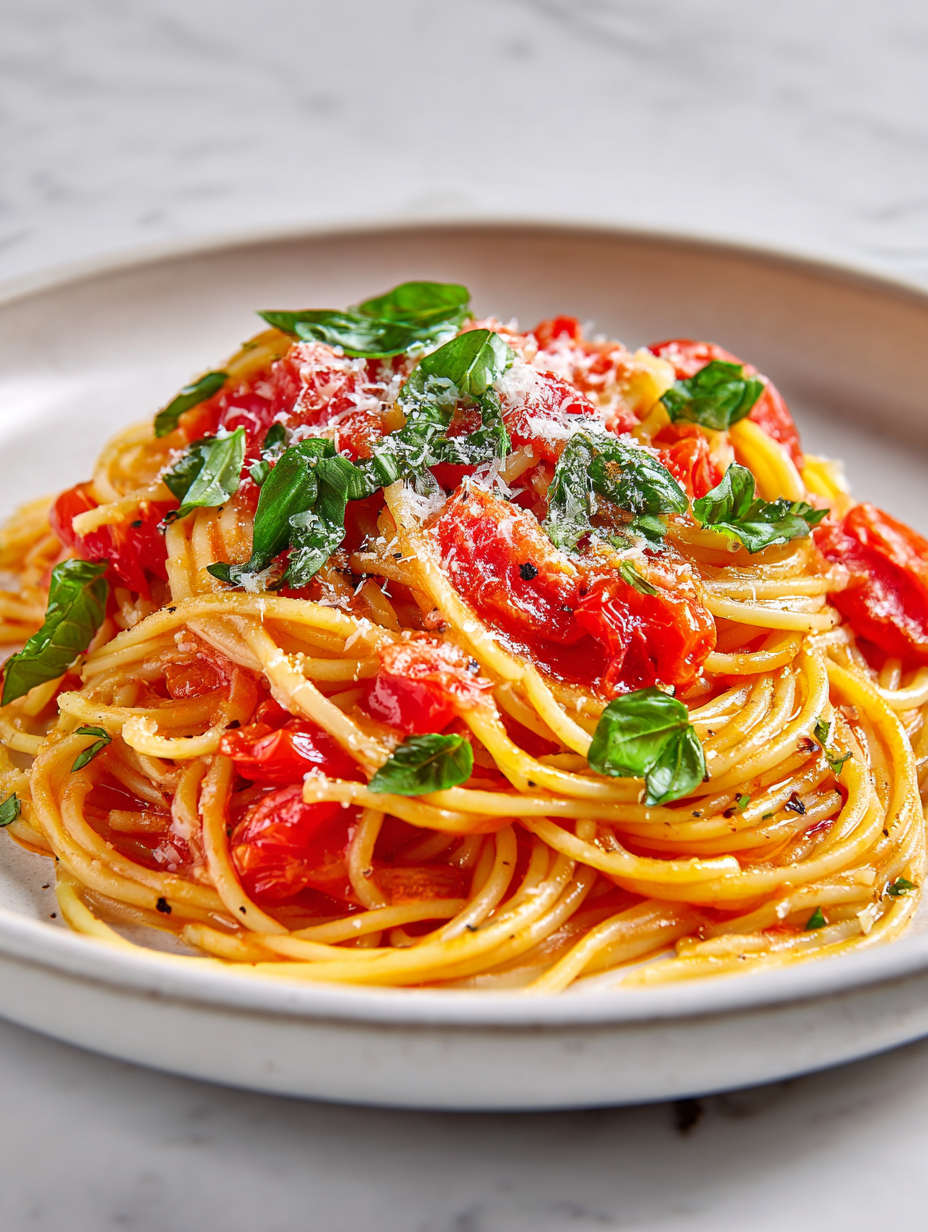
This spaghetti with tomato and basil is all about celebrating the raw, honest flavors of summer. I love how a handful of ripe tomatoes and fresh basil can turn simple pasta into something so fragrant and satisfying, without much fuss. It’s the kind of dish that reminds me to slow down and appreciate the small, perfect ingredients in my kitchen.
I’ve made this recipe countless times in a rush or when I want something comforting but fresh. It’s my go-to for those evenings when I want a quick meal that feels like a warm hug. The magic lies in the details—ripe tomatoes that burst with juice, fragrant basil that perfumes the air, and just enough good olive oil to tie it all together.
Focusing on how the simplicity of this dish lets the quality of ingredients shine, I want to emphasize the importance of choosing ripe, fragrant tomatoes and fresh basil. This recipe isn’t about complex techniques—it’s about paying attention to the small details that elevate a humble meal into something memorable.
The modest magic of fresh ingredients
- There’s a quiet joy in slicing ripe tomatoes, feeling their warmth and bright aroma fill the kitchen.
- Cooking this dish reminds me of summer evenings at my family’s table, laughter mixing with the scent of basil.
- Sometimes I rush through it, but when I take my time, the flavors deepen into something almost nostalgic.
- Seeing the vibrant red and green on my plate makes me feel connected to the garden and the seasons.
- A simple meal like this can turn a hectic day into a moment of calm and appreciation.
The story behind this recipe
- This dish started as a way to use up a bumper crop of tomatoes one summer. I’d spend mornings wandering through my garden, picking the ripest, juiciest fruits, and by evening, I’d be tossing them with fresh basil and garlic. It’s simple, honest food—nothing fancy, just ingredients at their peak, coming together fast enough that I can still savor every bite while it’s warm.
- I remember the first time I made it for friends, and how the aroma of basil and ripe tomatoes filled the room. It was one of those moments where everything felt right—no fuss, just good, honest flavors. That’s what keeps me coming back to this recipe: it’s a reminder that the simplest things often taste the best, especially when they’re made with care.
- heading: ‘The humble inspiration’
Trivia and Origins
- This dish traces its roots to the Italian countryside, where farmers used ripe, fresh ingredients to create quick, satisfying meals.
- The combination of tomato, basil, and spaghetti became emblematic of Italian simplicity, emphasizing quality over complexity.
- Historically, tomatoes were once considered exotic in Italy; now, they’re the star of countless pasta dishes and Italian identity.
Ingredient breakdown: key components
- Ripe tomatoes: I love squeezing and feeling their softness, the smell is so sweet and bright. If yours are mealy, skip for a fresher batch or blend into a sauce for a smoother texture.
- Fresh basil: I tear it just before adding, releasing that fragrant aroma that’s so essential. Swap with oregano if you prefer a different herbal note, but the basil’s bright punch is what makes this dish sing.
- Extra virgin olive oil: The good stuff adds a fruity, peppery kick at the end. If you only have a milder oil, don’t overdo it—just enough to coat the pasta and bring out the flavors.
- Garlic: I prefer thinly sliced rather than minced to avoid bitterness. If you’re in a rush, garlic powder works, but it loses that pungent, sweet quality I love in fresh garlic.
- Spaghetti: I use traditional durum wheat pasta for that perfect al dente bite. Whole wheat can work if you want a nuttier flavor, but it’s a different experience—more hearty, less delicate.
- Salt: I add it to the pasta water generously—salty like the sea—to season the noodles from the inside out. Don’t skimp, or the sauce won’t taste as vibrant.
- Optional chili flakes: I sprinkle a pinch for a subtle heat that balances the sweetness of the tomatoes. Skip if you prefer it mellow, but I love that little kick.
Spotlight on key ingredients
Tomatoes:
- Ripe tomatoes: I love squeezing and feeling their softness, the smell is so sweet and bright. If yours are mealy, skip for a fresher batch or blend into a sauce for a smoother texture.
- Fresh basil: I tear it just before adding, releasing that fragrant aroma that’s so essential. Swap with oregano if you prefer a different herbal note, but the basil’s bright punch is what makes this dish sing.
Olive oil and garlic:
- Extra virgin olive oil: The good stuff adds a fruity, peppery kick at the end. If you only have a milder oil, don’t overdo it—just enough to coat the pasta and bring out the flavors.
- Garlic: I prefer thinly sliced rather than minced to avoid bitterness. If you’re in a rush, garlic powder works, but it loses that pungent, sweet quality I love in fresh garlic.
Notes for ingredient swaps
- Fresh tomatoes: If ripe, use heirloom or cherry tomatoes for a sweeter, more concentrated flavor. Canned whole peeled tomatoes are a good substitute if fresh aren’t available, just crush them by hand.
- Basil: Substitute with fresh oregano or thyme if basil isn’t at hand. Dried herbs are okay in a pinch but won’t offer the same bright, fragrant punch.
- Olive oil: Use a light vegetable oil or avocado oil if you’re out of good extra virgin. Expect less aromatic complexity, but the dish will still come together.
- Garlic: If fresh isn’t available, garlic powder or granulated garlic can work. Use about half the amount called for, and add towards the end of cooking to avoid bitterness.
- Spaghetti: Any long pasta like linguine or fettuccine can swap in. For gluten-free, opt for rice or chickpea pasta—just adjust cooking times as needed.
- Salt: Use sea salt or kosher salt for a cleaner taste. Adjust the quantity to suit your preference, especially if your substitute ingredients are more or less salty.
- Chili flakes: For a smoky heat, try smoked paprika or a dash of cayenne pepper. Keep in mind, these will change the flavor profile but add a lovely warmth.
Equipment & Tools
- Large pot: Boil pasta evenly and efficiently.
- Skillet/non-stick pan: Cook the tomato and garlic sauce.
- Wooden spoon: Stir ingredients gently and prevent scratching pans.
- Grater: Freshly grate cheese or zest if needed.
Step-by-step guide to spaghetti with tomato and basil
- Gather your equipment: a large pot for boiling pasta, a skillet (preferably non-stick) for sauce, a wooden spoon for stirring, and a grater for cheese. Fill the pot with water, add a generous pinch of salt, and bring to a rolling boil at 100°C (212°F).
- While waiting, prep your tomatoes: wash and roughly chop. If you prefer a smoother sauce, blanch and peel them first. Slice garlic thinly—aim for translucent, fragrant slices. Rip fresh basil leaves into pieces, avoiding bruising.
- Add spaghetti to boiling water. Cook until just al dente, about 8-10 minutes, tasting for that slight resistance. Drain, reserving a cup of pasta water—this will help adjust sauce consistency later.
- While pasta cooks, heat a tablespoon of olive oil in your skillet over medium heat (about 160°C/320°F). Add garlic slices. Cook until golden and fragrant, about 1-2 minutes, stirring constantly to avoid burning. If garlic browns too fast, lower heat.
- Add chopped tomatoes to the skillet. Cook at medium heat (around 150°C/300°F) for 5-7 minutes, mashing slightly with your spoon. Look for the juices to release and the mixture to turn glossy and fragrant. If it thickens too much, splash in reserved pasta water to loosen.
- Toss cooked pasta into the skillet with the tomato mixture. Stir gently to coat evenly. Let it cook together for another 2 minutes, allowing flavors to meld. Check seasoning; add more salt or a pinch of chili flakes if desired.
- Finish with torn basil and a drizzle of olive oil. Toss again, then taste and adjust seasoning. The sauce should cling lightly to the pasta, with a fresh, vibrant aroma. Turn off heat and let it rest for a minute before plating.
- Plate the pasta in warm bowls. Garnish with freshly grated cheese or more basil if desired. Serve immediately, enjoying the fragrant steam and the bright, juicy tomatoes.
Toss pasta with sauce off heat, let sit for a minute to settle, then serve immediately with optional toppings.
How to Know It’s Done
- Tomatoes: look for a glossy, slightly thickened sauce with bright aroma.
- Pasta: al dente with a slight resistance when bitten, not mushy.
- Garlic: golden, fragrant slices—not burnt or bitter.
Spaghetti with Tomato and Basil
Ingredients
Equipment
Method
- Bring a large pot of water to a rolling boil, then add a generous pinch of salt. Drop in the spaghetti and cook until just al dente, about 8-10 minutes, stirring occasionally. Drain and set aside, reserving a splash of pasta water.
- While the pasta cooks, prepare the fresh ingredients. Wash and roughly chop the tomatoes, then peel and thinly slice the garlic. Tear the basil leaves gently to release their aromatic oils.
- Heat 2 tablespoons of olive oil in your skillet over medium heat until it shimmers and begins to smell fragrant. Add the sliced garlic, cooking for about 1-2 minutes, stirring constantly, until it turns golden and fragrant.
- Add the chopped tomatoes to the skillet. Cook over medium heat for 5-7 minutes, mashing them slightly with the back of your spoon until the mixture turns glossy and fragrant, and the juices get a little thickened. If the sauce looks too thick, stir in a splash of the reserved pasta water to loosen it.
- Once the sauce is ready, add the drained spaghetti directly into the skillet. Toss gently with a wooden spoon, coating each strand evenly with the tomato mixture. Let it cook together for another 2 minutes to meld the flavors.
- Remove the skillet from heat. Toss in torn basil leaves and drizzle with the remaining olive oil. Stir gently to combine, allowing the basil to release its fragrance and brighten the dish.
- Taste and adjust the seasoning with a pinch of chili flakes or salt if needed. If the sauce feels too thick, stir in a little more reserved pasta water to loosen it up.
- Serve immediately, garnished with freshly grated Parmesan cheese if you like. Enjoy the vibrant colors, fragrant aroma, and tender pasta coated in a fresh, juicy tomato sauce.
Tips for Perfect Spaghetti
- Bolded mini-head: Use high-quality olive oil to enhance the fruitiness and peppery notes in every bite.
- Bolded mini-head: Salt your pasta water generously—think like the sea—to ensure the noodles are flavorful from the inside out.
- Bolded mini-head: Tear basil leaves instead of chopping; this releases more aromatic oils and keeps the flavor bright.
- Bolded mini-head: Cook garlic slices until just golden; this keeps them sweet and fragrant without bitterness.
- Bolded mini-head: Reserve a cup of pasta water before draining; it’s perfect for loosening the sauce and adding richness.
- Bolded mini-head: Toss the pasta in the sauce off heat, then let it rest a minute—this helps the flavors meld beautifully.
- Bolded mini-head: Finish with a drizzle of good olive oil and fresh basil right before serving for a fragrant, glossy finish.
Common mistakes and how to fix them
- TOO MUCH PASTA: Drain immediately to prevent overcooking, or it will turn mushy.
- OVER-COOKED TOMATOES: Remove from heat once they release juices and turn glossy, not burnt.
- BURNED GARLIC: Stir constantly and lower heat if garlic starts to brown too fast.
- SALTY WATER: Taste the pasta water; it should taste like the sea for ideal seasoning.
Quick Fixes and Pantry Swaps
- If sauce is too thick, splash in hot pasta water and stir until loosened.
- When tomatoes lack brightness, add a squeeze of lemon or a pinch of sugar.
- Splash a bit more olive oil if the sauce feels dull or too watery.
- Patch burnt garlic by removing it and adding fresh slices to revive aroma.
- Shield over-torched basil by quickly stirring in fresh, fragrant leaves for brightness.
Prep, store, and reheat tips
- Chopped tomatoes and torn basil can be prepped up to a day ahead; keep refrigerated in airtight containers to preserve their brightness and aroma.
- Cooked spaghetti can be stored in the fridge for up to 24 hours; toss with a little olive oil to prevent sticking and keep it from drying out.
- Reheat gently in a skillet over low heat, adding a splash of water or olive oil to revive moisture. The flavors will deepen slightly, so taste and adjust seasonings.
- The sauce is best fresh, but can be made up to 2 days in advance and stored in the fridge. Reheat slowly, stirring often, until fragrant and hot.
- For longer storage, freeze individual portions of the sauce for up to 3 months. Thaw overnight in the fridge and reheat gently, checking for flavor and texture.
Top questions about spaghetti with tomato and basil
1. How do I pick the best tomatoes for this dish?
Fresh, ripe tomatoes will give you a bright, juicy sauce. If your tomatoes are mealy, consider blending them into a smoother, sweeter sauce instead.
2. Can I use regular olive oil instead of extra virgin?
Use good quality extra virgin olive oil for a fruity, peppery flavor that ties everything together nicely.
3. How do I prevent garlic from burning?
Cooking the garlic just until golden and fragrant avoids bitterness and ensures a sweet, mellow flavor.
4. Should I chop or tear basil before adding?
Tearing basil releases more aroma than chopping, keeping the flavor fresh and vibrant in the dish.
5. How much salt should I add to the pasta water?
Salting the pasta water generously ensures the noodles are flavorful from the inside out, enhancing the overall taste.
6. Why should I save pasta water?
Reserving some pasta water helps loosen the sauce and helps it cling better to the noodles.
7. How do I know when the pasta is al dente?
Cook the pasta until just al dente—still slightly resistant when bitten—to prevent it from becoming mushy after mixing.
8. When should I add basil and olive oil?
Adding fresh basil and a drizzle of good olive oil right before serving keeps the flavors bright and fragrant.
9. Can I make parts of this dish ahead of time?
You can prepare the chopped tomatoes and torn basil a day ahead; store in airtight containers and reheat gently.
10. What if my sauce gets too thick?
If the sauce thickens too much, add a splash of reserved pasta water or a bit of olive oil to loosen it up.
This simple pasta dish proves that beauty really does come from the most modest ingredients. When everything comes together—the ripe tomatoes, fragrant basil, and good olive oil—you get a meal that’s honest and satisfying without any fuss.
In a world of complicated recipes, it’s worth remembering that some of the best meals are the simplest. A bowl of spaghetti with tomato and basil is a reminder to slow down, savor the moment, and enjoy the natural flavors that summer has to offer.

Hi, I’m Daniel Whitaker, the voice behind Micromanaging Flavor. For me, micromanaging flavor is not about perfectionism. It is about paying attention. It is about understanding the small adjustments that turn a good dish into a great one. This blog is my space to explore those details and share what I learn along the way.
