
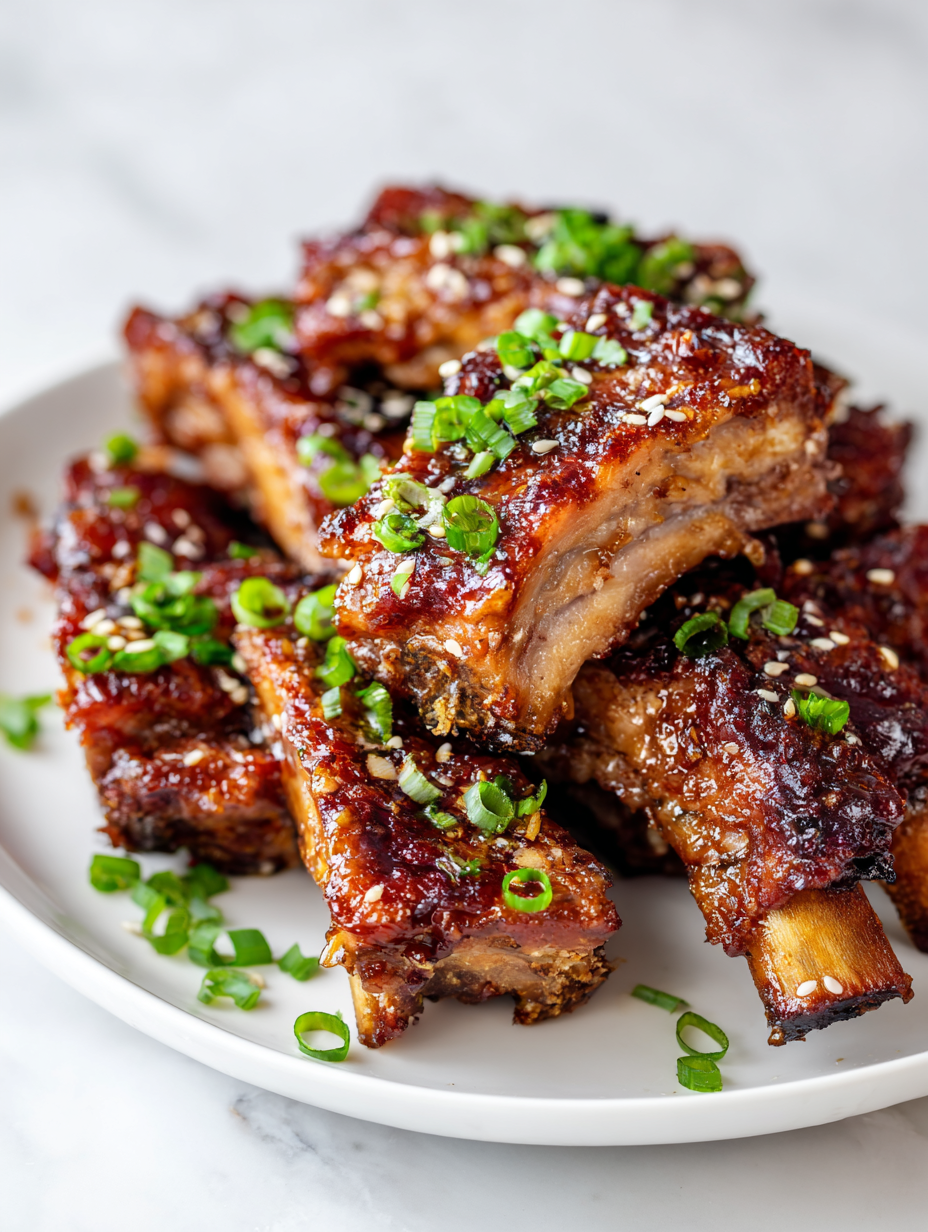
There’s something about that final caramelized coat on sticky pork ribs that keeps pulling me back to the grill or oven. It’s not just the sweetness or the smoky aroma, but the way the glaze clings to the meat, crackling slightly as it cooks. That sticky, shiny crust feels like a reward in itself, a perfect mix of patience and heat.
Getting to that point takes a bit of care—watching the glaze bubble and darken, smelling the sugar caramelize into a rich, almost toasty aroma. It’s chaotic at times, but honestly, that’s part of the fun. Each batch feels like a small victory, a little bit of magic happening right on the surface of the ribs, making every bite irresistibly gooey and flavorful.
Focusing on the irresistible sticky glaze that develops during the final caramelization, emphasizing the sensory journey of the sticky, smoky, sweet crust forming on the ribs.
The allure of caramelized crust
- That first sticky, caramelized bite takes me right back to summer cookouts, the smell of smoke and sweet glaze filling the air.
- I love how the glossy crust crackles under my teeth, a perfect contrast to the tender, fall-off-the-bone meat inside.
- There’s a rush of pride when I see that shiny, caramelized coating—like I’ve nailed that perfect glaze without burning it.
- Sometimes I get a little chaotic, juggling sauce, heat, and timing, but watching the glaze turn into that sticky, smoky crust makes it all worth it.
The story behind this recipe
- This recipe came about after a messy weekend of experimenting with different glazes and heat levels. I wanted something that captured the sticky, sweet, smoky goodness without fussing over perfect timing. The real breakthrough was realizing how the glaze transforms during that final caramelization, creating a crust that’s almost candy-like.
- I remember the first time I got that deep, glossy shine on the ribs—my kitchen filled with a smell that’s part burnt sugar, part roasted pork, and all irresistible. It’s a reminder that sometimes, the best bites come from a little chaos, a watchful eye, and a lot of tasting. Now, I keep tweaking the balance, trying to get that perfect sticky crust every time, and honestly, it feels like a small victory each effort.
- That moment when the glaze bubbles and turns dark, crackling slightly—that’s when I know I’m close. It’s a messy, glorious process that rewards patience and attention, turning simple ribs into something with a smoky, sweet crust that makes the whole house smell like a barbecue joint.
Trivia and Historical Notes
- Sticky pork ribs with a caramelized glaze have roots in Asian barbecue traditions, where sugar and soy create a shiny, irresistible crust.
- The technique of glazing and caramelizing meat dates back centuries, originally as a way to preserve and add flavor to pork in hot climates.
- In many cultures, sticky ribs became popular as street food, loved for their sweet, smoky, and tender qualities that make every bite memorable.
Key ingredients and tips
- Pork ribs: I like using baby back ribs for their tenderness and ease of handling; you can swap with spare ribs, but expect a longer cook and a more pronounced chew.
- Sweet soy sauce: It gives that rich, umami base and sticky gloss. If you prefer less salt, try coconut aminos, but reduce the quantity slightly to avoid thinning the glaze.
- Honey or brown sugar: I rely on honey for its floral sweetness and shine, but maple syrup works beautifully too—just watch for extra caramelization.
- Garlic and ginger: They add depth and warmth. Fresh is best, but garlic powder and ground ginger are quick substitutes—just cut the quantities in half.
- Smoked paprika: It’s the secret to that smoky aroma without a smoker. Use chipotle powder if you want a spicier kick, but dial back if you’re sensitive.
- Rice vinegar: I add a splash for brightness and balance. If you don’t have vinegar, a little apple juice can mimic the sweetness and acidity.
- Sesame oil: Just a teaspoon gives a nutty finish. Skip if you want a cleaner, more neutral flavor, but don’t skip the sesame seeds on top!
Spotlight on key ingredients
Pork Ribs:
- I prefer using baby back ribs for their tender, juicy meat and even cooking; spare ribs are meatier but chewier, great if you like a more substantial bite.
- Sweet soy sauce: It’s the backbone of that sticky, glossy glaze—rich, umami, and just a hint of salty sweetness. Coconut aminos can replace it for a lighter, soy-free version, but expect a slightly different flavor and less stickiness.
Spices & Sweeteners:
- Honey: I love how honey adds that floral, golden sweetness and a shiny, tacky finish. Maple syrup can be an alternative, giving a deeper, caramel note, but watch for increased caramelization.
- Smoked paprika: It’s what gives the ribs their smoky aroma without needing a smoker—smoky, warm, and slightly sweet, it’s essential for that deep flavor. Chipotle powder can add heat if you want more punch.
Notes for ingredient swaps
- Pork Ribs: I prefer baby back ribs for tenderness, but spare ribs can work—just expect a longer cook and a chewier bite.
- Sweet Soy Sauce: It’s key for that sticky gloss. Coconut aminos are a good low-sodium alternative, but reduce the amount slightly.
- Honey or Brown Sugar: Honey adds a floral sweetness and shine, maple syrup gives a richer flavor—adjust for sweetness and consistency.
- Garlic and Ginger: Fresh garlic and ginger are best for punch, but garlic powder and ground ginger are quick swaps—use half as much.
- Smoked Paprika: It’s the smoky backbone. Chipotle powder adds heat—use sparingly to avoid overpowering the glaze.
- Rice Vinegar: Brightens the glaze. Apple cider vinegar can be a milder substitute, or a splash of apple juice for sweetness.
- Sesame Oil: Nutty and aromatic. You can skip or replace with a neutral oil if you prefer a cleaner flavor, but don’t skip the sesame seeds on top!
Equipment & Tools
- Oven: For slow roasting and caramelization
- Baking sheet with foil: Easy cleanup and even heat distribution
- Roasting rack: Elevate ribs for even cooking and glazing
- Brush: Apply glaze evenly and thoroughly
- Sharp knife: Trim excess fat and portion ribs
Guide to perfect sticky ribs
- Preheat your oven to 150°C (300°F). Use a baking sheet lined with foil for easy cleanup. Gather your ribs, a sharp knife, a brush, and a roasting rack.
- Trim any excess fat from the ribs, then season generously with salt and pepper. Let sit while you prepare the glaze.
- Mix your glaze: soy sauce, honey, garlic, ginger, smoked paprika, rice vinegar, and a splash of sesame oil. Stir until combined and sticky.
- Brush a thin layer of the glaze on the ribs. Place the ribs on the roasting rack set in the baking sheet, meat side up.
- Bake in the oven for about 2 hours. The meat should be tender but not falling apart. Check occasionally to avoid drying out.
- Remove from oven. Increase oven temperature to 220°C (430°F) or switch to broil. Brush another layer of glaze generously over the ribs.
- Place the ribs back in the oven, under the broiler, for 5-7 minutes. Watch closely—aim for a deep, caramelized, sticky crust that crackles when pierced.
- Once the glaze has darkened and the surface is glossy and sticky, remove from oven. Let rest for 10 minutes before slicing.
- Slice between the bones, serve hot, and spoon over any remaining glaze. The crust should be shiny, slightly tacky, with a smoky aroma.
Let the ribs rest for 10 minutes to allow juices to settle. Slice between the bones, serve immediately with extra glaze drizzled on top.
How to Know It’s Done
- The glaze is deeply caramelized and shiny, with a crackly crust.
- Meat is tender and pulls slightly from the bone when tested with a fork.
- Surface has a dark, even color without burnt spots, and smells sweet and smoky.
Sticky Caramelized Pork Ribs
Ingredients
Equipment
Method
- Preheat your oven to 150°C (300°F). Line a baking sheet with foil and set a roasting rack inside.
- Trim any excess fat from the ribs with a sharp knife, then season them generously with salt and pepper. Let them sit while you prepare the glaze.
- In a small bowl, whisk together soy sauce, honey, minced garlic, grated ginger, smoked paprika, rice vinegar, and sesame oil until the mixture is smooth and sticky.
- Brush a thin layer of the glaze onto the ribs, coating them evenly on all sides. Place the ribs on the prepared rack, meat side up.
- Bake the ribs in the oven for about 2 hours. The meat will become tender and slightly shrink back from the bones, and the glaze will bubble gently.
- Remove the ribs from the oven and increase the temperature to 220°C (430°F), or switch to broil mode. Brush another generous coat of glaze over the ribs.
- Place the ribs back in the oven under the broiler. Broil for 5-7 minutes, watching closely as the glaze bubbles, darkens, and forms a shiny, crackly crust.
- Once the surface is deeply caramelized and sticky, remove the ribs from the oven. Let them rest for 10 minutes to allow the glaze to set and juices to redistribute.
- Slice between the bones and serve the ribs hot, with any remaining glaze brushed over the top for extra shine and flavor.
Notes
Pro tips for perfect sticky ribs
- Use a sugar-heavy glaze for a quick caramelization. It helps develop that sticky crust fast.
- Keep the oven at high heat during broiling to crackle the glaze without burning.
- Apply glaze in thin layers—patience here builds a shiny, tacky coating.
- Watch the ribs closely under the broiler—dark, bubbling glaze is your cue.
- Rest the ribs after baking—this helps the juices settle and the glaze set properly.
- Use a silicone brush for even glaze application—avoids excess and mess.
Common mistakes and how to fix them
- FORGOT to monitor glaze: It can burn quickly; stay close and watch for dark spots.
- DUMPED excess sauce: Too much glaze causes a sticky mess; apply in thin layers, building up.
- OVER-TORCHED the crust: Broil just until deep amber; residual heat keeps it from burning.
- MISSED resting time: Let ribs sit 10 minutes to lock in juices and set the glaze.
Quick Fixes for Sticky Ribs
- If glaze burns, splash with a little water and lower heat to rescue the sticky finish.
- When ribs are too dry, cover with foil and reheat gently to regain moisture.
- DUMPED too much sauce? Wipe excess quickly before it caramelizes into a bitter crust.
- When crust isn’t sticky enough, brush with additional glaze and broil briefly for shine.
- Splash a splash of apple juice if glaze is too thick—keeps it glossy and prevents cracking.
Prep, store, and reheat tips
- You can prep the glaze and season the ribs up to a day ahead. Keep covered in the fridge to let the flavors meld and the meat stay tender.
- Stored in an airtight container, cooked ribs will keep in the fridge for up to 3 days. Reheat slowly to maintain moisture and avoid drying out.
- For longer storage, freeze the ribs wrapped tightly in foil and then in a zip-top bag. They will last up to 2 months. Thaw overnight in the fridge before reheating.
- Reheating in the oven at 150°C (300°F), covered with foil, helps revive the tenderness. Glaze may crisp up further, so keep an eye for over-browning.
- Sensory tip: The aroma will deepen, and the glaze might become stickier or more caramelized after resting or reheating, adding to the sticky, smoky experience.
Top questions about sticky pork ribs
1. What kind of pork ribs should I choose?
Look for ribs with a good marbling of fat; it keeps the meat tender and juicy during cooking.
2. How do I know when the ribs are done?
A deep, dark caramelized crust with a sticky, shiny surface indicates they’re ready. The meat should be tender and pull away from the bone easily.
3. How do I get that perfect sticky crust?
Use a brush to apply a thin layer of glaze multiple times, especially during the final broil, to build that sticky, crackly crust.
4. What if the glaze burns?
If the glaze starts to burn or turn bitter, lower the oven temperature and keep a close eye during broiling.
5. Can I make these ahead?
Reheat in a low oven (around 150°C/300°F) covered with foil to maintain moisture. The glaze may become even stickier and more flavorful.
6. How long can I store leftovers?
Yes, store leftovers in an airtight container in the fridge for up to 3 days. Reheat slowly to keep the meat tender and glaze sticky.
7. Any tips for applying the glaze?
Use a silicone brush for even glaze application. Keep a close eye under the broiler to prevent burning the sugar-rich surface.
8. What if my ribs are dry after reheating?
If ribs are too dry, cover with foil and reheat gently. Adding a splash of water or apple juice helps restore moisture.
9. Can I adjust the glaze for different flavors?
A splash of apple juice or vinegar in the glaze can add brightness and help prevent burning during caramelization.
10. Can I customize the glaze ingredients?
Yes, using different sugars like maple syrup or honey affects the sweetness and shiny finish. Adjust quantities based on your preference.
There’s something about that sticky, caramelized crust on pork ribs that feels like a small triumph every time. The smell of smoky sweetness filling the kitchen, the crackle as you bite into the crust—those moments stick with you long after the ribs are gone.
This recipe isn’t just about the meat; it’s about the messy, joyful process of creating something deeply flavorful and satisfying. Sometimes, the best bites come from a little chaos and a lot of tasting, turning simple ribs into a memorable, gooey experience worth every effort.

Hi, I’m Daniel Whitaker, the voice behind Micromanaging Flavor. For me, micromanaging flavor is not about perfectionism. It is about paying attention. It is about understanding the small adjustments that turn a good dish into a great one. This blog is my space to explore those details and share what I learn along the way.
